
“The people who survive the next decade won’t be the ones with the best credentials. They’ll be the ones who stopped mourning the world that was and started building for the one that doesn’t exist yet” (Terence Tao, Fields Medal–winning mathematician).
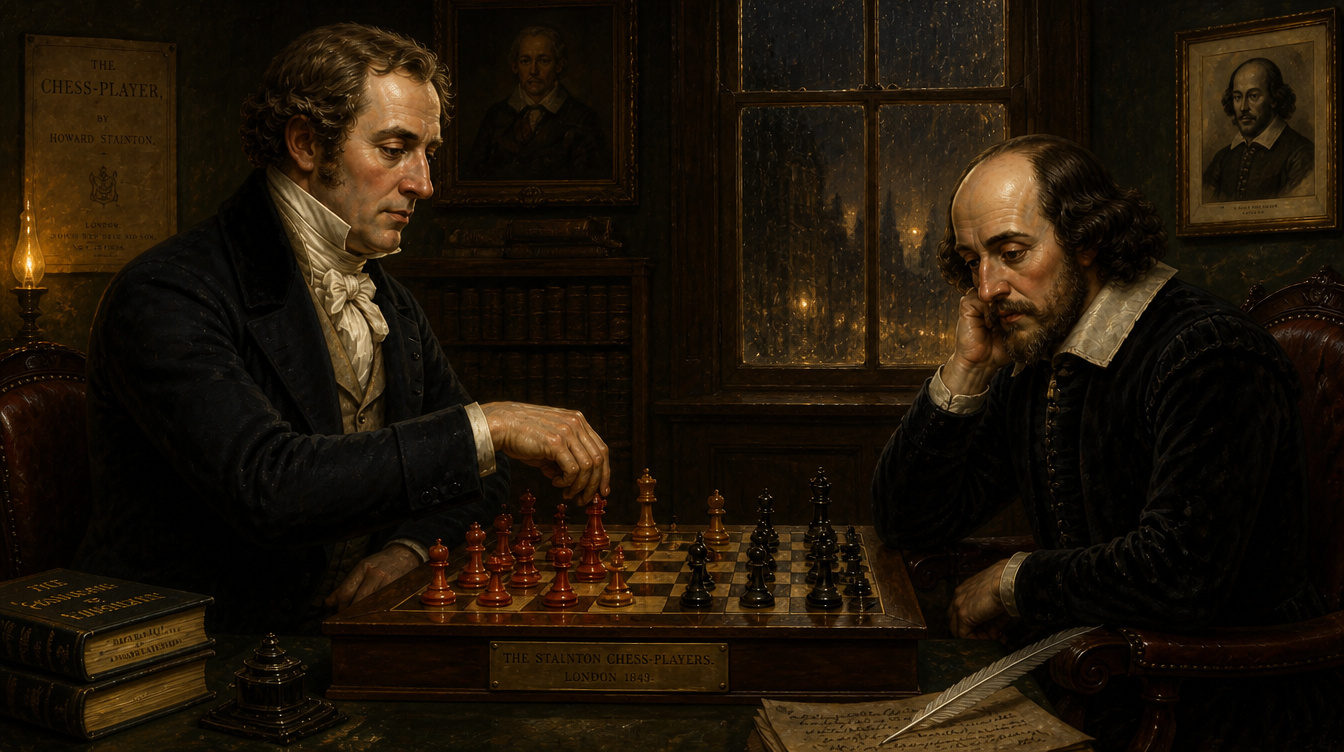
It is always worth watching the best practitioners of any craft. One learns, if not how to succeed, then at least how to avoid failure. This applies to football (more on which below) as much as to chess. In the latter, I have been a huge fan of the 20-plus-match format for the chess world championship since early youth. This was introduced by the Staunton v St Amant clash at Paris 1843 and subsequently crowned such titans as Steinitz, Lasker, Capablanca, Alekhine, Botvinnik, Fischer and Kasparov.
Now, though, with the self-imposed exile of the world’s strongest player, Magnus Carlsen, and his replacement by the pathetic usurpers Gukesh Dommaraju (2739: ranked #7 in the current world rankings) and Ding Liren (2734: unranked briefly due to insufficient games played), it is manifest that the ancien regime has collapsed. The future heralds a new way of determining the strongest player.
“I’m not trying to take anything away from Gukesh Dommaraju or Ding Liren, but for me, the story of the classical World Championship ended with Magnus Carlsen. I’m a traditionalist. In my view, the world champion should be the strongest player on the planet.” (Garry Kasparov)
The fresh dawn involves a multi-player world tour, embracing different, faster time limits, designed to appeal to the post-Netflix/post-Covid audience for online chess, which has massively expanded as a result of these events. Even the jaded Carlsen is attracted by such a format, and it has also succeeded in enticing a new breed of chess sponsor, football stars.
“Chess is an incredible game. It sharpens your mind, and there are clear similarities to football. You have to think quickly, trust your instincts, and think several moves ahead. Strategy and planning are everything“, “I’m investing in Norway Chess because I believe the new Total Chess World Championship Tour can turn chess into an even bigger sport for spectators around the world. The team behind Norway Chess has already done an impressive job growing the event, and joining the project was too exciting to pass up.” (Erling Haaland, international football star for Manchester City & Norway)
Football sponsorship for chess, however, has left a residue in the mind. It is the sort of contradiction (or is it?) that encourages speculation, particularly of the kind that links the remote past with the rather self-conscious present. I found myself considering the supposed division between physical and mental sport, a distinction which, though frequently asserted, becomes less convincing the more one examines it. Friedrich Schiller, whose words lie behind Ludwig van Beethoven’s Ninth Symphony, appears to have dismissed such a division altogether.
Before arriving at his conclusion, one must pass through the filter of translation, which is never a neutral process. The German language, with its tendency toward density and precision, resists easy conversion into English. The version I encountered comes through Gesine Dörnberg, an evidently serious figure, whose credentials — Hamburg, Slavic philology, ethical journalism — suggest a mind trained to respect nuance.
“Der Mensch spielt nur, wo er in voller Bedeutung des Wortes Mensch ist, und er ist nur da ganz Mensch, wo er spielt.”
It is a sentence that appears simple, and yet, like most such sentences, conceals a difficulty. Dörnberg renders Schiller’s words thus: “Man is only fully human when at play.” The idea, stripped of ornament, is that play represents a liberation from both necessity and duty. It is, in effect, a momentary escape from compulsion, and therefore a condition in which freedom — and, by extension, beauty — can exist.
This brings me to a more recent text: Football and Chess: Tactics, Strategy, Beautyby Adam Wells. He argues that football and chess are, at a fundamental level, variations of the same activity. Both involve space, timing, and the breaking down of resistance. The rules are minimal, the objectives clear. Yet it is precisely this simplicity that produces complexity.
The element of teamwork — or, in chess, coordination — is crucial. A single misplaced piece, or player, can undo an otherwise sound position. It follows that a technically superior side may be defeated by one that is merely more coherent. This is a truth recognised, consciously or not, by luminary managers such as Rafael Benitez and Karel Brückner, both of whom have shown a preference for structure over individual brilliance.
A more contemporary example is Enzo Maresca (ex-Chelsea & Leicester), whose interest in the parallels between football and chess is not incidental but formalised in his studies at Coverciano. That such a comparison should be taken seriously in a professional context suggests that the distinction between “physical” and “mental” sport is, at best, artificial.
The games themselves are inexhaustible. Their possibilities are not merely numerous but effectively infinite. This is what gives them their peculiar fascination: they are always susceptible to reinterpretation. One does not so much master them as participate in an ongoing process.
There persists, nevertheless, a misconception that chess is purely a matter of calculation. This is contradicted by the testimony of players such as Mikhail Tal and Garry Kasparov, both of whom emphasise intuition. Calculation, while necessary, is insufficient. The same applies to football, where decision-making under pressure requires not only analysis but instinct.
As the legendary Dutch midfielder Arnold Mühren observed, football is played “with your brains, not with your feet.” It is a statement that, like Schiller’s, appears obvious once it has been made, yet is seldom acted upon.
The apparent difference between the games — that one is dynamic and the other static — is, on closer inspection, less significant than it seems. In chess, movement is implicit in every position; in football, it is merely more visible. Both demand a continuous mental engagement, without which they become mechanical and uninteresting.
It is therefore not entirely surprising that individuals have excelled in both domains. Simen Agdestein, another Norwegian, is a case in point, his career illustrating the compatibility of the two pursuits. His decision to forgo an international football match in order to play Garry Kasparov is, in its way, a perfect expression of Schiller’s principle: the prioritisation of play, in its highest form, over obligation.