Some years ago, in collaboration with Leonardo da Vinci connoisseur and Japanese martial arts expert Michael Gelb, I wrote Samurai Chess. In this book, we sought to draw parallels between martial arts and chess. The latest Japanese craze to sweep the metropolis has been Sumo wrestling: part sport and part Shinto religion. It is wrestling, but not as we know it, with 500lb giants facing off in rapid-fire bouts which usually last just minutes. The Grand Sumo tournament took place at the Royal Albert Hall for five days in early October, 2025, resulting in packed houses and 12.5 hours of BBC TV coverage.
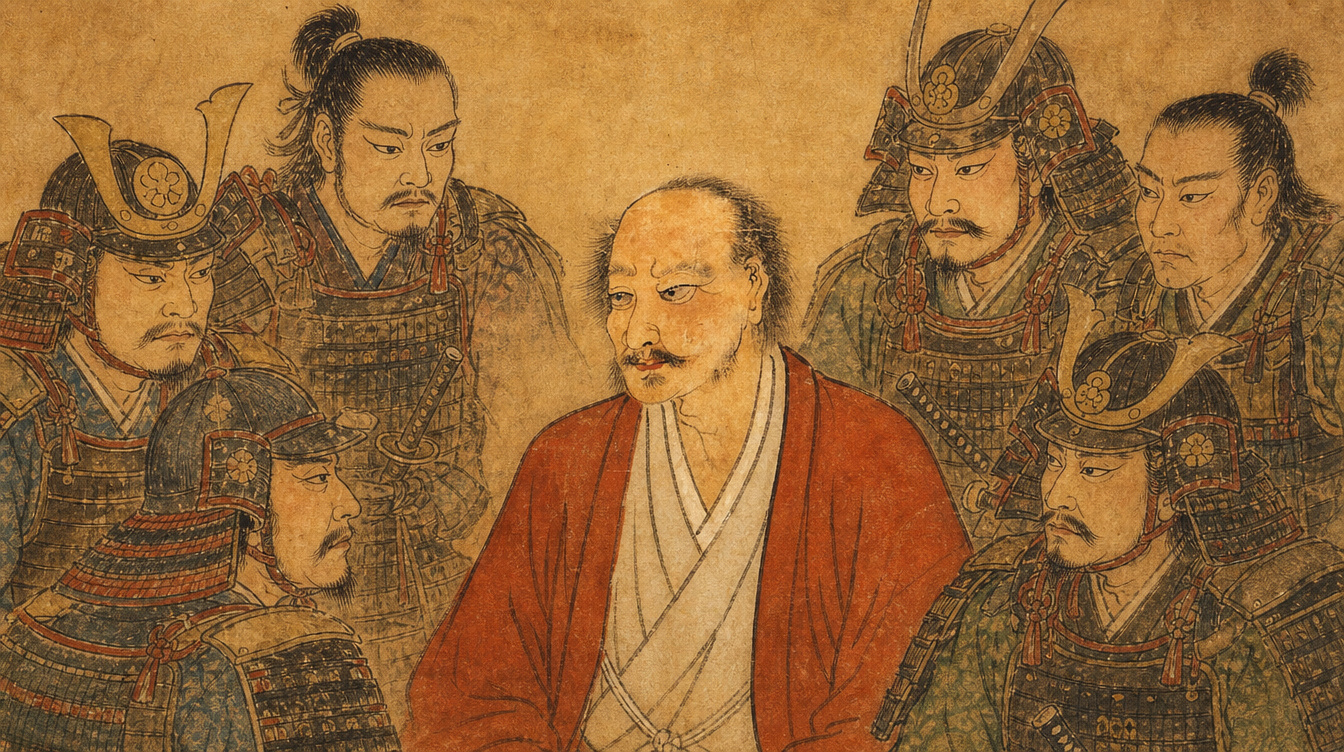
In the middle of the seventeenth century, in a Japan distant from our own in every imaginable way, a man named Miyamoto Musashi wrote a book that has haunted me ever since I first encountered it. He was a samurai, a warrior who lived and breathed the art of combat, and yet he was also a thinker. His work, Go Rin No Sho, or The Book of Five Rings, is in the first instance a manual of swordsmanship. But it is more than that. It is, at its core, a meditation on strategy, on human decision, and on the strange way in which one can transfer mastery from one field to another. For over three centuries, Musashi’s wisdom remained largely unknown outside Japan until, in 1974, it appeared in English translation.
The reception was astonishing, much as the reception for Sumo has been wildly enthusiastic. Within months, the book sold hundreds of thousands of copies, and suddenly the name of a man long dead was being cited in boardrooms and newspapers alike. Time Magazine observed, almost incredulously, that “On Wall Street, when Musashi talks, people listen.” The New York Times called his strategy “suddenly a hot issue on Wall Street.” One could almost hear the clatter of swords replaced by the rattle of trading floors.
Musashi’s message, which he stated again and again in his book, is deceptively simple: “From one thing, know ten thousand things.” By mastering one discipline, by learning it so thoroughly that the knowledge becomes second nature, one gains the ability to see patterns everywhere, to act decisively, and to anticipate consequences in fields far removed from the original practice. Though on the surface Go Rin No Sho is about samurai swordsmanship, at a deeper level it is a guide to life itself: to decision, to action, to strategy, whether on the battlefield, in the home, or in the corridors of corporate power. It is a book about clarity of thought and the courage to act. Identical qualities are seen in the battles of the Sumo dojo.
Yet Musashi’s brilliance presents difficulties for the modern reader. He writes in a language that is often obscure, heavily informed by Zen, and the central metaphor of life-and-death combat with a sword is largely inaccessible. We are not samurai; we do not face the immediate possibility of death in the ordinary course of our lives.
The lessons, though, remain, if we are willing to find a modern analogue. For me, that analogue has always been chess. Unlike the samurai duel, chess offers victory without bloodshed and defeat without injury, yet the pressures it imposes are real. It is a contest of the mind, and in that contest one is forced to think clearly, to anticipate consequences, to understand one’s opponent, and above all to take responsibility for every decision.
Chess, in its various forms, is the world’s most widely practised “mind sport”, with hundreds of millions of enthusiasts. But it is not merely a pastime. It is a discipline. The great players, from Garry Kasparov to the creators of AlphaZero at DeepMind, have demonstrated that the game is at once timeless and modern, a test of ingenuity and calculation that remains uncannily relevant even in an age of artificial intelligence. The great machines that have mastered chess have shown us that the principles Musashi expounded — of strategy, foresight, and disciplined thought — are universal.
Yet the appeal of chess is more than theoretical. It is a game in which one experiences genuine triumph and genuine failure. One must calculate, anticipate, and act under pressure. Time constraints sharpen the mind. Risk must be assessed honestly. There is no hiding behind luck or blaming others for mistakes. The lessons extend naturally to life: one learns that the world, like the chessboard, is unforgiving, but that the rewards for careful thought are real and lasting. Musashi would have understood this. In chess, as in swordsmanship, mastery depends not on chance but on vigilance, discipline, and insight.
It is perhaps this rigour, this refusal to tolerate evasion, that makes chess so valuable. As Emanuel Lasker, world champion from 1894 to 1921, observed, chess is a fight — not the gory fight of the battlefield, but a fight in which intellect and judgment reign supreme. In it, human nature is laid bare. One learns about oneself: can one follow through on a plan, resist impatience, hold under pressure, and act decisively? Can one be gracious in victory and dignified in defeat? Chess is, in this sense, a moral as well as an intellectual discipline. It teaches self-knowledge, the awareness of strengths and weaknesses, and the necessity of understanding others. To succeed, one must think as one’s opponent thinks, anticipating actions and reactions.
The benefits of chess extend beyond strategy and psychology. Memory, for instance, is strengthened by the repeated practice of openings and patterns. I recall a demonstration I once gave at Oxford, playing 107 opponents in a giant square around me. In three hours, I lost only once, drew five games, and won the remainder. Afterwards, I could recall every move of every game. Such feats are not the result of innate talent alone; they are the product of intense focus and disciplined practice. Memory, as I have learned, is the foundation of intelligence and creativity. Without it, one cannot recombine ideas to innovate or respond to new situations.
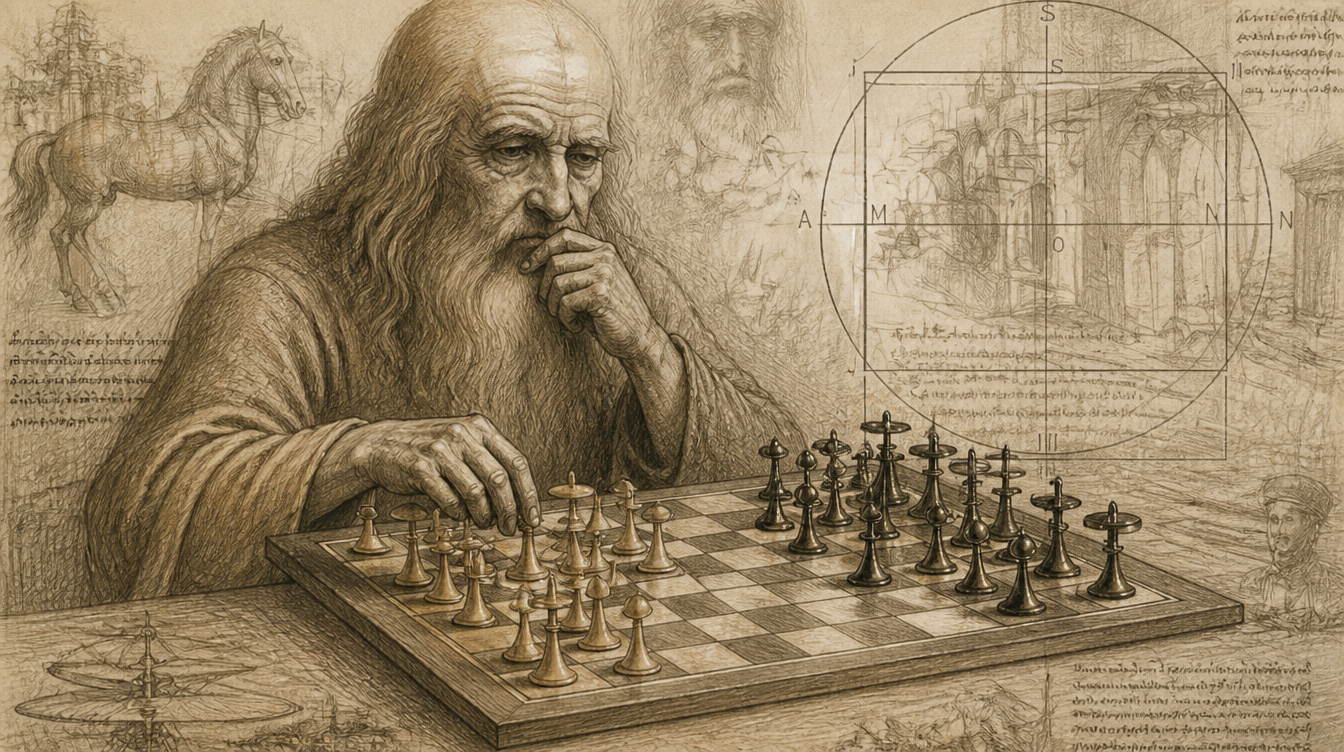
Nor is chess merely a mental exercise. It slows the mind’s decay with age, keeping it alert and flexible. Leonardo da Vinci compared the human mind to iron or water: without use, it rusts or stagnates. Chess ensures that the mind flows.
And it is beautiful. Marcel Duchamp observed that the game offers a mixture of abstract and concrete aesthetic pleasures: the image, the idea, and its execution on the board. Every piece has character, every movement a poetry of logic. The bishop’s diagonal, the knight’s leap, the rook’s thrust — these are not only strategic but sensually satisfying. To play chess is to enter a world of ordered beauty, where intellect and sense converge.
Chess teaches decision-making in the strictest sense: to decide is to eliminate alternatives. On the board, indecision is fatal; every choice has consequences, every hesitation invites disaster. Lasker was right: on the chessboard, lies and hypocrisy do not survive long. The game also sharpens analytical and strategic thinking. Leibniz, the philosopher, called it a practice in reason and resourcefulness, qualities that are more essential today than ever. A plan must be made, variations considered, outcomes anticipated — a microcosm of life itself.
History confirms the value of chess beyond the game. In the Second World War, Britain’s code-breaking centre at Bletchley Park recruited the strongest chess players in the country. C.H.O’D. Alexander, twice British Champion, became a central figure in the effort to break Nazi codes. Decades later, in the world of finance, chess players have demonstrated superior strategic acumen. Norman Weinstein, an international master, became a top trader at Bankers Trust and later at Odyssey Partners, crediting his success to the skills cultivated at the board. The ability to plan, anticipate, and implement a strategy under pressure is precisely what chess cultivates, and it translates directly to life’s practical battles.
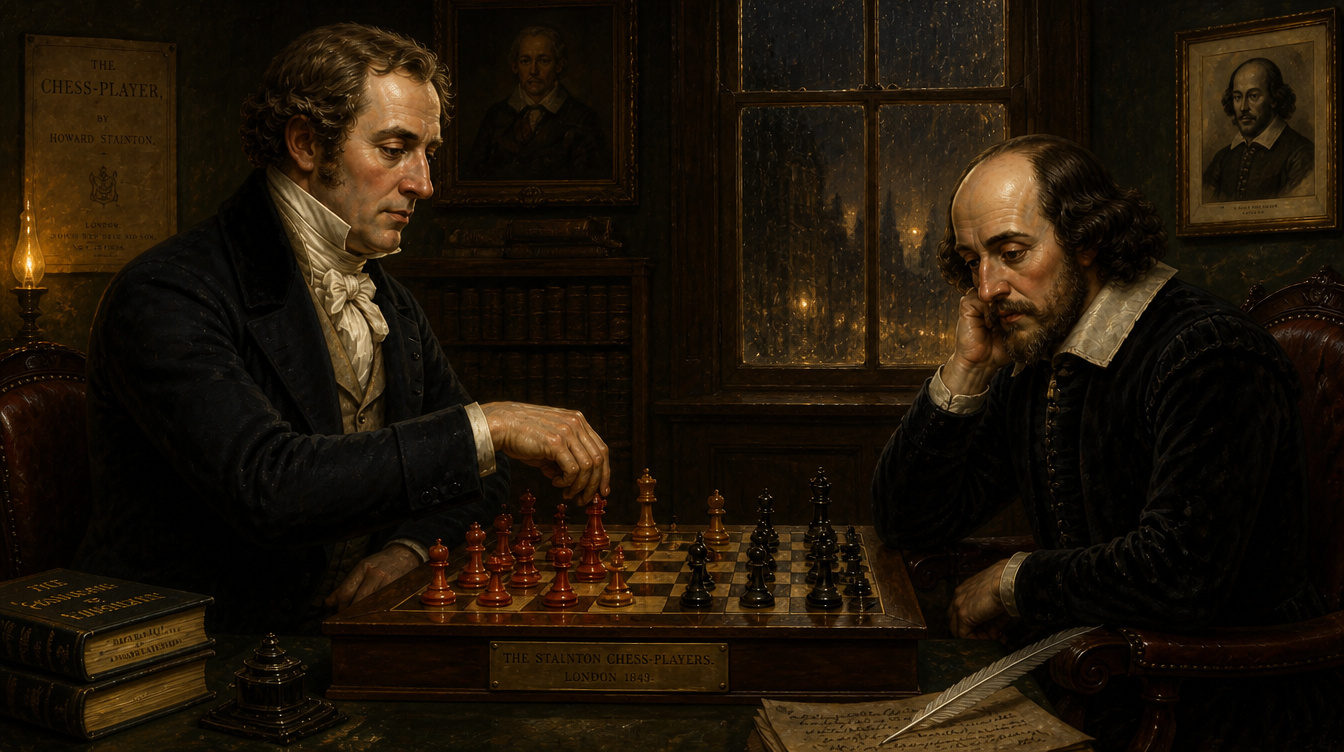
Even across cultures, parallels are evident. The Japanese shogi champion Yoshio Kimura, a lifetime Meijin, faced Alexander Alekhine, world chess champion, in a symbolic meeting of minds and strategy, a contest between two masters of different games. The lesson is universal: mastery in one domain sharpens insight in another. Musashi would have recognised this immediately.
I have come to see chess, in its demands on patience, foresight, and discipline, as a kind of civilised warfare — a training in ethics as well as intellect. It does not appeal to mere chance or brute strength. Instead, it demands responsibility, the courage to act, and the humility to learn from defeat. These are precisely the qualities Musashi sought to instil in the samurai: awareness of consequences, clarity of vision, and adaptability. To study chess is to study life.
I have argued here, perhaps at some length, that the lessons of Musashi can be realised in a modern, non-lethal form. Chess, as a mental discipline, embodies the same principles: mastery, clarity, foresight, and the courage to act decisively. It teaches us about ourselves and about others, about risk and reward, strategy and ethics. In a world increasingly dominated by abstraction, technology, and uncertainty, it is perhaps the most reliable way to cultivate the qualities that Musashi revered: skill, judgment, and the ability to perceive the world in its entirety, from one thing to ten thousand.
To pick up a chess piece is to engage in something larger than the immediate move. It is to train the mind, to confront one’s limits, to wrestle with consequences, and, if one is fortunate, to glimpse the order beneath apparent chaos. Musashi wrote that mastery of strategy allows one to see it in everything. Chess allows us to do precisely that: to see patterns, anticipate danger, plan our responses, and act with clarity. It is, I believe, the modern samurai’s discipline.
One last attraction of Sumo for me is that instead of having to watch emaciated waifs competing for athletic honours, the Sumo warriors on display far more closely resemble my own body shape. That said, I can still only claim half Sumo status.