In mental sport modern elite chess Grandmasters tend to follow a monk-like existence, based on the knowledge that smoking, drinking, and especially drugs, are all utterly inimical to the fully functioning operation of the human brain. Although smoking was, for example, once obligatory at Eton College, being regarded as a sovereign remedy against infectious disease, we all now realise its health drawbacks. Of course, smoking during official chess games is now absolutely banned. There was even a brief vogue by puritanically-minded zealots for trying to forbid coffee during games, on the specious grounds that caffeine is a prohibited stimulant.
This is all a far cry from the Bohemian past of chess champions. Not everything that is forbidden to monks is forbidden to chess players. Jose Capablanca (World Champion 1921-1927) was a noted charmer, and of course sex has not been eliminated from the otherwise austere lives of the current crop of “mental athletes”, as they like to style themselves.
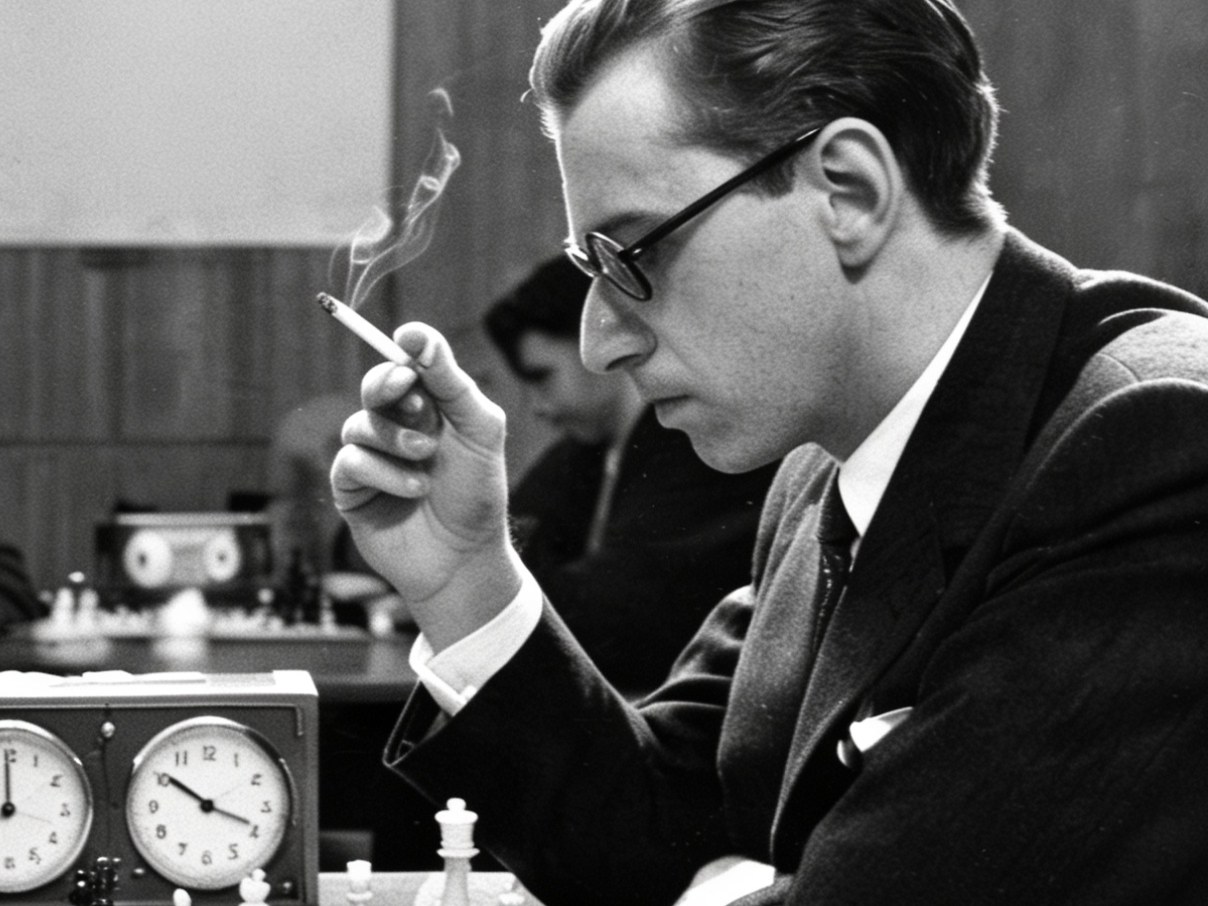
Emanuel Lasker, World chess Champion from 1894-1921, was a philosopher and mathematician, who was friendly with Einstein. Lasker was, therefore, not an obvious candidate as a Bohemian, but he was notorious for smoking cigars during his games. So prevalent was smoking at chess tournaments, that the Red Czar of Soviet Chess, Mikhail Botvinnik (World Champion from 1948 on and off until 1963) engaged a training partner to blow smoke into his face during practice, with, for good measure, a radio turned on full blast to simulate distracting background noise in the competition hall. This was a clever precaution since, without exception, during the heyday of Soviet chess dominion, major chess championships would have been packed with thousands of excitable and noisy fans.
Extreme examples of the Bohemian tendency were the World Champions Alexander Alekhine (1927-1935 / 1937-1946) and Mikhail Tal (1960-1961) both smokers and drinkers on an epic scale.
Grandmaster Harry Golombek OBE, several times British Champion, was once demonstrating to team-mates a win of which he was particularly proud. Up strolled an inebriated Alekhine, who without hesitation pointed out a vital improvement which Golombek had completely overlooked. This led Harry to the observation that a drunken Alekhine played better chess than a sober Golombek.
I also recall, when I competed alongside Mikhail Tal at the Hastings International Tournament of 1973/74, that I went to the hotel bar one evening after a hard day’s play to order a brandy. My modest request was thwarted when told by the barman: “that Russian gentleman“(he meant Tal, who was in fact from the Latvian part of the Soviet Imperium) had consumed the hotel’s entire stock of brandy during a drinking session into the early hours the night before.
As to smoking, the Olympic standard was set by the Dutch Grandmaster Jan Hein Donner, who seemed to exist on a diet of black coffee (of which 90 per cent was heaped up white sugar) and hand rolled, chain smoked cigarettes. A new biography of the man described as the greatest Dutch contrarian of the 20th century, has just appeared, published by New in Chess.
At the 1973 match between England and the Netherlands, played in Manchester Town Hall, I drew my game on top board against the former Dutch World Champion (1935-1937) Dr Max Euwe. After we had finished discussing our game, I wandered over to watch the game on board two between Donner, a formidable player who had numbered both Boris Spassky and Bobby Fischer among his victims, pitted against ten-times British champion, Dr Jonathan Penrose.
The contrast with modern chess could not have been more marked. At that time, smoking was permitted during play, and to accommodate the ash, outsize circular Bakelite ashtrays were placed on each table. Donner constantly refilled his sugar-fuelled black coffees, and backed up this stimulant with cigarette after cigarette, lighting each new one with the stub of the old and thereby building up a vast pile of half burnt cigarettes in the ashtray.
Eventually, the pile of ash increased to mountainous dimensions, it began to emit smoke itself, then burst into flames and caused the giant ashtray to crack into two. There was now, literally, fire on board! The two players seemed transfixed, horrified, and unable to react in this crisis.
Realising that urgent action was mandatory, during this temporary mental paralysis of the two combatants, I, with what I considered to be admirable presence of mind, seized Donner’s coffee cup and hurled the contents onto the flaming heap of ash, thus extinguishing the flames. Given the very high sugar content of the liquid, however, my prompt action had the effect of converting the conflagration into a thick, black, sticky, hot, steaming pyroclastic flow, trickling slowly across the table, but at least no longer threatening to consume Manchester Town Hall in flames.
As if emerging from a trance, Donner and Penrose looked up at each other, spontaneously, agreed the game drawn, fled from the scene and left me to explain to the janitor what had happened, before he set about cleaning up the liquefied mini-volcanic residue still smouldering on their chess table.
Donner was a giant of a man in every respect, approximately six feet six inches in height, with a dominating personality, a Bohemian outlook on life and possessed of an intellectual powerhouse of a mind, bursting with ideas, all seemingly plausible, many brilliant, always entertaining, but, due to a sublime indifference to the pin-headed pedantry and tyranny of facts and details, often just plain wrong. He was a quintessential contrarian. Suspected by the Dutch authorities of being at best a communist sympathiser and at worst a revolutionary, he once donated a richly bejewelled and fabulously valuable gondola, which he had won at a tournament in Venice, to the Vietcong. Cue national outrage and a consequent complete absence of invitations to chess competitions in the US.
Indeed, his general attitude to the USA was tinged with the belief that their society was profoundly anti-intellectual. A typical Donner comment would be: “The game of chess has never been held in great esteem by the North Americans. Their culture is steeped in deeply anti intellectual tendencies. They pride themselves in having created the game of poker. It is their national game, springing from a tradition of westward expansion… they distrust chess as a game of Central European immigrants with a homesick longing for clandestine conspiracies in quiet coffee houses. Their deepest conviction is that bluff and escalation will achieve more than scheming and patience (witness their foreign policy).”
What about Morphy and Fischer, one might object, two of the greatest chess geniuses of all time. Yet both were meteors, blazing with an all too brief incandescence, before being extinguished. Both were clearly alienated, deracinated even, from mainstream American culture. Neither felt comfortable with what should have been their home.
Donner was blessed with a trenchant pen and a powerful chess mind. He notched up victories against world champions, Vassily Smyslov, Bobby Fischer and Boris Spassky during his long and successful career and won the major international chess tournaments of Beverwijk 1963 and Venice 1967. Arguably, his best ever result was not a victory but taking second prize behind World Champion Boris Spassky, ahead of Mikhail Botvinnik and Bent Larsen, at the exclusive super-elite tournament at Oegstgeest 1970.
Away from the chessboard, Donner seemed to be involved in perpetual adventure and controversy. During the Moluccan terrorist scare in Holland during the early 1970’s, I sent Donner a side of smoked salmon as a Christmas present. The Moluccan slogan was no secret: “the time for revenge has now come!” Fearing a Moluccan bomb arriving in the post, delivered to a person whom the Moluccans might have (incorrectly) identified as a prominent member of the Dutch Establishment (far from it, of course) Donner summoned the Amsterdam police to open the package. I wish I could have been there when that parcel was unwrapped.
Although by no means a member of the Establishment, neither was Donner a card-carrying member of the Communist Party. In my opinion, he just did it to annoy. As he once confided to me, had he actually gone to join the Vietcong. He wouldn’t have lasted a week, and would probably been promptly executed as an enemy of the people.
On another occasion, in our game from a Grandmaster tournament in the Algarve 1975, Donner simply failed to appear for our afternoon encounter scheduled for 4:00 pm. Minutes before he would have defaulted, I rushed to his hotel room and hammered on his door to awaken him from porcine slumber after a heavy drinking session the night before. After much thumping with my shoe, a bleary eyed, pyjama-clad Donner appeared at the door, whereupon I managed to drag him downstairs for our game, in the nick of time before a statutory forfeit for failure to reach the board before sixty minutes had elapsed. The game was quickly drawn with Donner sent back to his room to sleep off the hangover.
Our hero was also perpetually embroiled in disputes with Dutch rivals and the Dutch Chess Federation. Once claiming to have experienced a vision of The Almighty himself, while crossing a bridge in Prague, Donner contemptuously dismissed the younger generation of Dutch masters in thunderous tones, as monks who had never seen the face of God.
After his epiphany in Prague, Donner enjoyed a curious relationship with the celestial realm. Donner’s close friend, author and Dutch national treasure, Harry Mulisch, created a character called Onno Quist, based on Donner, and included him in his book De Ontdekking van de Hemel, “The Discovery of Heaven”. The book was later made into a film of the same name, starring our very own national treasure Stephen Fry as the Donner/Quist character.
It was from Donner’s classic anthology of his chess columns, The King, (published by the Dutch firm New in Chess) that I first learnt about whether chess was played in Heaven and/or Hell.
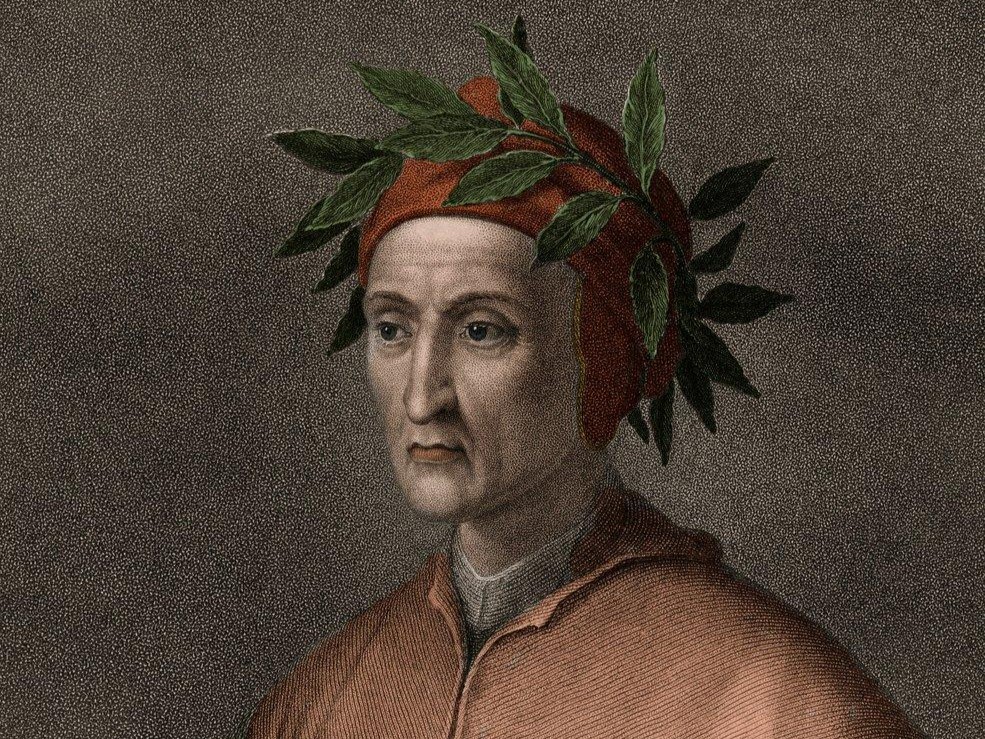
As I have pointed out on several previous occasions, Donner’s discursive style in The King, formed the inspiration for my approach in the weekly chess columns I have been contributing to TheArticle. In one essay from The King, Donner indicates that in his Paradiso, Dante interrogates Beatrice, his celestial guide, about the number of angels in the heavens. The response is that there are more angels in heaven than created by the formula of placing a grain of corn on the square a1 of the chessboard and doubling every square thereafter, which results in the mathematical formula of 2 to the power of 64 minus one, a vast number: 18,446,744,073,709,551,615. It is to be found in the Paradiso, Canto XXVIII vv92-93:
“ed eran tante, che ‘l numero loro piu che ‘l doppiar de li scacchi s’immilla.”
Donner was absorbed by numerology and, as we shall imminently see, on one occasion developed a theory based on there being 37 columns around St. Mark’s Square in Venice. The theory was, as was customary with Donner, ingenious and stimulating, but utterly wrong, because he had added up the number of columns incorrectly.
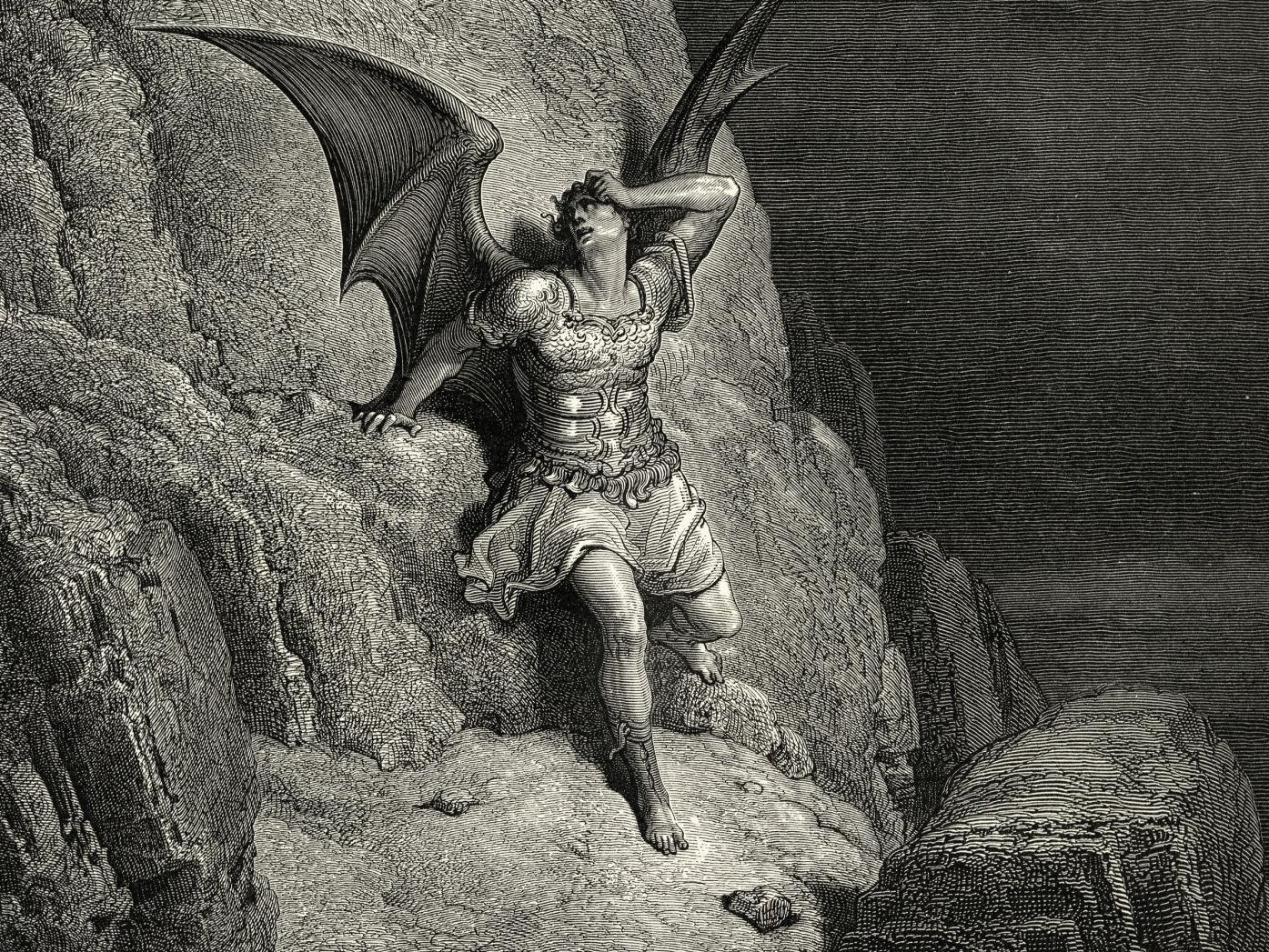
But what about the question of whether chess was played in Hell, which I am sure would have intrigued the intellectually curious Donner? If Dante is the expert on Heaven, then Milton is the go-to authority on Hell, though it must be admitted that Milton must have gathered considerable background information from his study of Dante’s Inferno.
I have scoured Paradise Lost for references to chess, but in vain, and where Dante employs a chess metaphor to convey the uncountable number of the heavenly hosts, Milton in Book I makes do with locusts to describe the vast number of demons consigned to Hades:
” – As when the potent rod Of Amram’s son in Egypt’s evil day Wav’d round the coast, up call’d a pitchy cloud Of locusts, warping on the Eastern wind, That o’er the realm of impious Pharaoh hung, Like night, and darken’d all the land of Nile; So numberless were those bad angels seen, Hov’ring on wing under the cope of Hell, ‘Twixt upper, nether, and surrounding fires.”
This passage also grants a rich insight into Milton’s use of metaphor. “Warping” describes movement, but also implies being warped, bent and thus deviant from God, whilst further introducing the concept of being thrown (origin German ‘werfen’ to throw) as in: thrown into the pit of Hell by God’s thunderbolts. The same trick of metaphoric legerdemain is achieved by the use of “pitchy”. Clearly pitchy, implies unstable movement, deprived of God’s guidance, not to mention the black, tar-like pitch of hell, and finally also containing the recurring theme of being thrown: once again being thrown, pitched or hurled by God into the chasm of Hell. Thanks Milton. All that linguistic ingenuity, but no sign of chess!
Where chess does epically recur is in T. S. Eliot’s Dante and Milton inspired: The Waste Land, from which I have borrowed the title for this column (Canto V) and which also contains the section A Game of Chess (Canto II). The Waste Land additionally engages with the question of numerology in Eliot’s vision of London Bridge, echoing Dante’s “Citta dolente” (“doleful city”), but here it is massed humanity who create the vast numbers, not Angels or Demons.
“Unreal City, Under the brown fog of a winter dawn, A crowd flowed over London Bridge, so many, I had not thought death had undone so many.”
Donner would have loved it: chess, numbers and untold opportunities for weaving fascinating, if incorrect, theories concerning the provenance of Eliot’s reference enriched narrative.
Donner’s style of chess commentary was also unmistakable. His notes were adorned with references to Plato, Aristotle and Leonardo da Vinci. Sometimes he gave deep variations and extensive analysis, but more often than not his tone was Biblical, apocalyptic even. Take this comment about a move by one of his opponents, the Argentine Grandmaster Quinteros, which, at one doleful stroke, converted a sure win into a probable loss:
“Then I, Johannes, heard a loud thunder and a great voice crying from heaven: Alas. And the sun became black as sackcloth of hair, and the moon became as blood. And the seven Angels with the seven vials cried: Alas. And the four beasts cried: Alas and the hundred and forty and four thousand cried: Alas. And there was silence in heaven about the space of three hours.”
Donner’s note contains half a line of chess analysis but 59 lines of descriptive text, possibly a world record in terms of the relative balance between text and analysis to one single move in a game of chess. Many of his views, if expressed nowadays, concerning women, computers and his chessboard rivals, would probably have landed him in court. They are of course unprintable here, but are preserved for posterity in The King. Be warned. Some of Donner’s opinions require a government health warning before reading. To quote Alexander Pope in his Epistle to Arbuthnot: “Pretty! In amber to observe the forms Of hairs, or straws, or dirt, or grubs or worms; The things, we know, are neither rich nor rare, But wonder how the devil they got there.”
The second great Donner book Hein Donner The Biography by Alexander Munninghoff was officially released last year. It is a richly entertaining account of Donner’s turbulent life, also, as with The King, published by the Dutch firm New in Chess. The story appears there of the aforementioned Venetian columns: Sitting on a pavement cafe on San Marco Square with Donner, the American Grandmaster Larry Evans was listening to a magnificent lecture of cosmic proportions by the Dutchman. Donner had taken the number of pillars around The Square as a starting point. Donner then progressed to explaining the world with the help of a few items of seemingly trivial data. During this magnificent peroration, though, Evans had started to count the pillars on which Donner’s entire thought construction had been based. The number was simply incorrect. Very interesting but always wrong, was Evans’s famous characterisation of Donner, which Donner, to my certain knowledge, regarded as a huge compliment. Sadly, Munninghoff passed away, earlier this year, just as his book was being reissued.
Donner’s defeats were just as spectacular as his victories. In The King he perfectly encapsulates how every chess player has to balance public decorum with private anguish after losing: “After I resigned the game with perfect self control and solemnly shook hands with my opponent in the best of Anglo-Saxon traditions, I rushed home, where I threw myself onto my bed, howling and screaming, and pulled the blankets over my face… all certainties have gone. My world is in ruins.”
The thunder and its chronicler have receded, but the reverberations have been preserved and live on to delight students of the original, the eccentric, the ingenious and the bizarre, both in chess and in life.
I often speculate on the role of chess in society. My conclusion is that playing chess encourages independent thought, reaching your own conclusions without following the banal diktats of the commentariat, or those of self appointed experts and authorities. If anyone could have claimed, with the Latin poet Horace, alongside Diogenes and St. Simeon Stylites, early advocates of the policy of social distancing, “odi profanum vulgus et arceo” (“I loathe and avoid the common herd”) where matters of the mind were concerned, that man was the thunderous and unique thinker, Johannes Hein Donner, philosopher, entertainer and chess grandmaster.
(I earlier cited the 93 signatory support by German intellectuals for the First World War “Aufruf a die Kulturwelt.” Such groupthink would have been poison, anathema and death to Donner, who would never have agreed to a collective opinion of that sort.)
I cannot think of Donner without recalling the imperious theme from Wagner’s Das Rheingold, where another Donner (the Norse god of Thunder) summons clouds and lightning to accompany the march of Wotan and his immortals into the divine fortress of Valhalla: “Donner der Herr, ruft euch zu Heer!” (“Donner, your Lord, summons you to arms!”) Donner the chess Grandmaster and Munninghoff, his Boswell, departed to Chess Valhalla many moons ago, but, with the publication of the biography, long may Donner’s indelible memory, outrageous views and brilliant games survive, to instruct, entertain and occasionally offend.