I have not been a member of the Staunton Society for very long but already I am fiercely proud to feature amongst its ranks. So much so, that I decided to dedicate my newly converted garage to the memory of the great man.
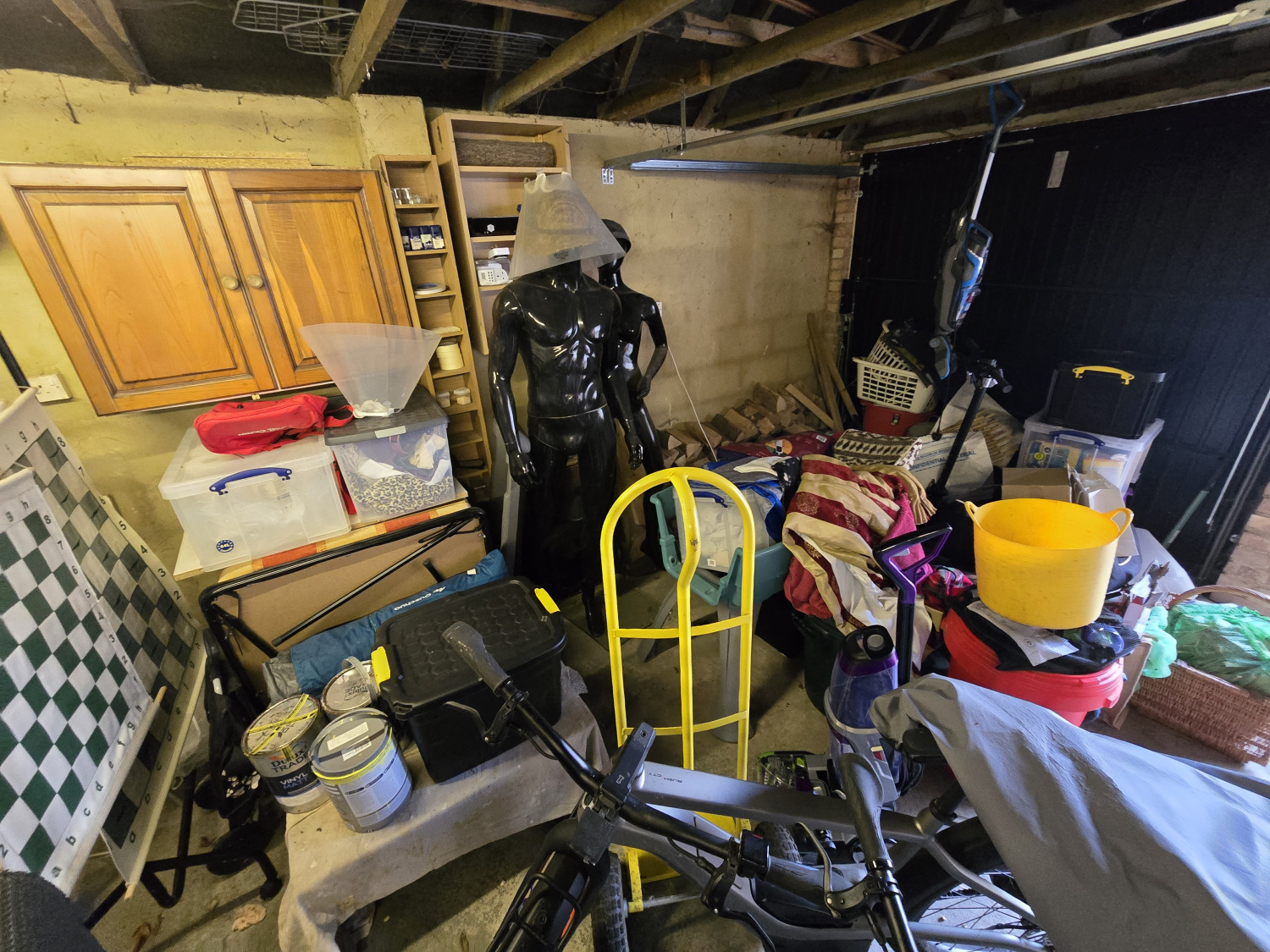
The construction is a double garage and like most people I never actually parked a car in it. Instead I managed to fill it with all sorts of stuff – you know, the things that I keep because ‘It might come in useful one day.’ This included several hundred cast off tarantula skins (I am an amateur arachnologist), two rather splendid mannequins which were dressed each year for Halloween and a large collection of chess sets, books and paraphernalia, many of which I donate to prisons.
This was the garage before any work began – please do not judge me. I promise my house is tidy!
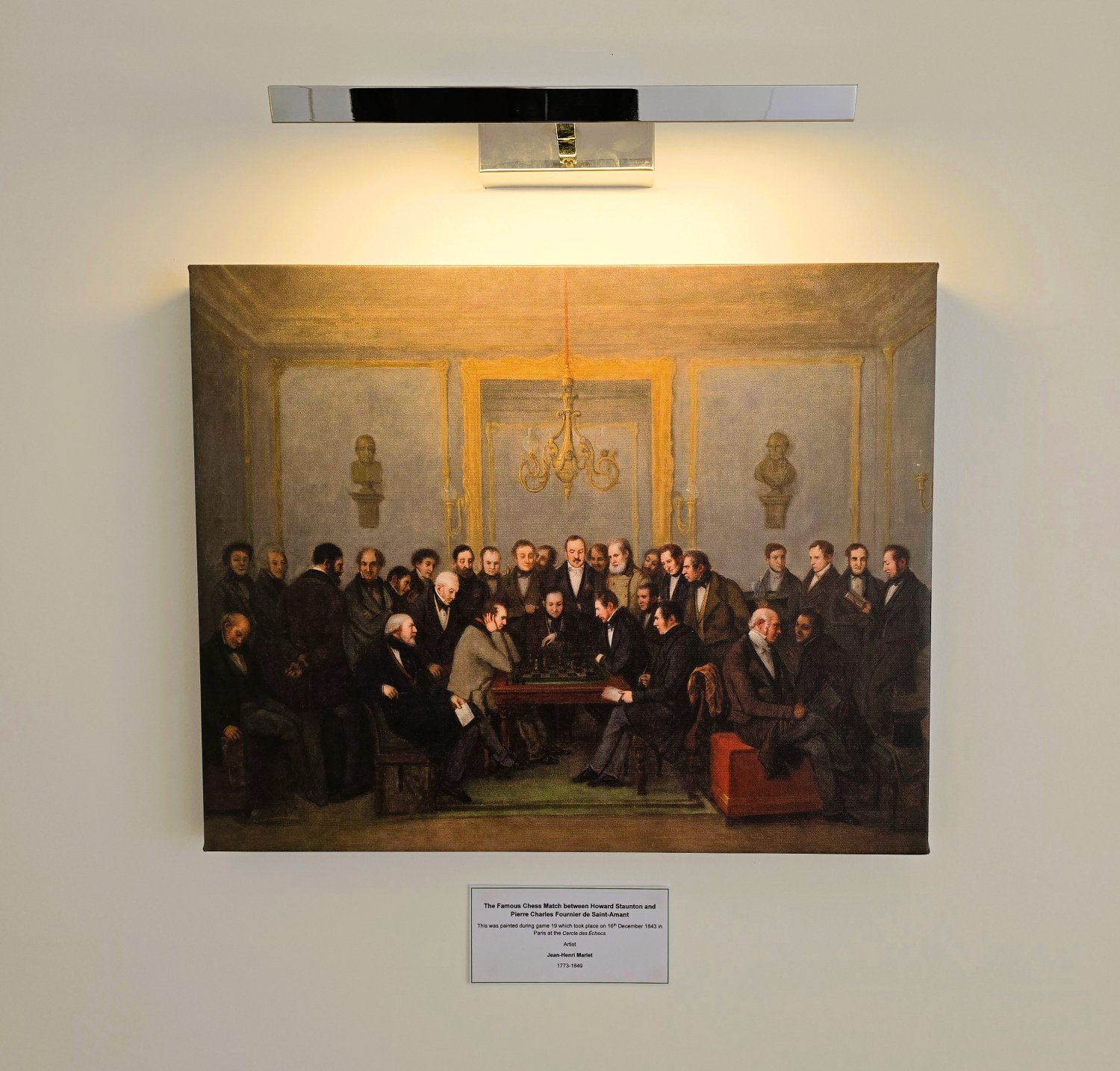
I had an idea what I wanted to do and the following are now in place. On one wall sits a canvas copy of the painting of the famous chess match between Howard Staunton and Pierre Charles Fournier de Saint Amant at the Cercle des Échecs in Paris by Jean-Henri Marlet. I believe it was painted in 1843 and it depicted the 19th game between the two which the Frenchman actually won, but Staunton won the match. My piece has a nice light above it so that the visitor can focus only on that piece on the wall.
The other painting I wanted to display was one I saw as a child and it frightened me. It was ‘Die Schachspieler’ by Friedrich August Moriz Retzsch, painted in 1831 featuring a chess game between Mephistopheles and Faust where the latter is playing the devil for his very soul. An angel looks on, acting as a mercurial kibitzer gazing dolefully at the position witnessing the apparent demise of Faust and his lost position. It seems inevitable that his poor soul will imminently belong to the devil.
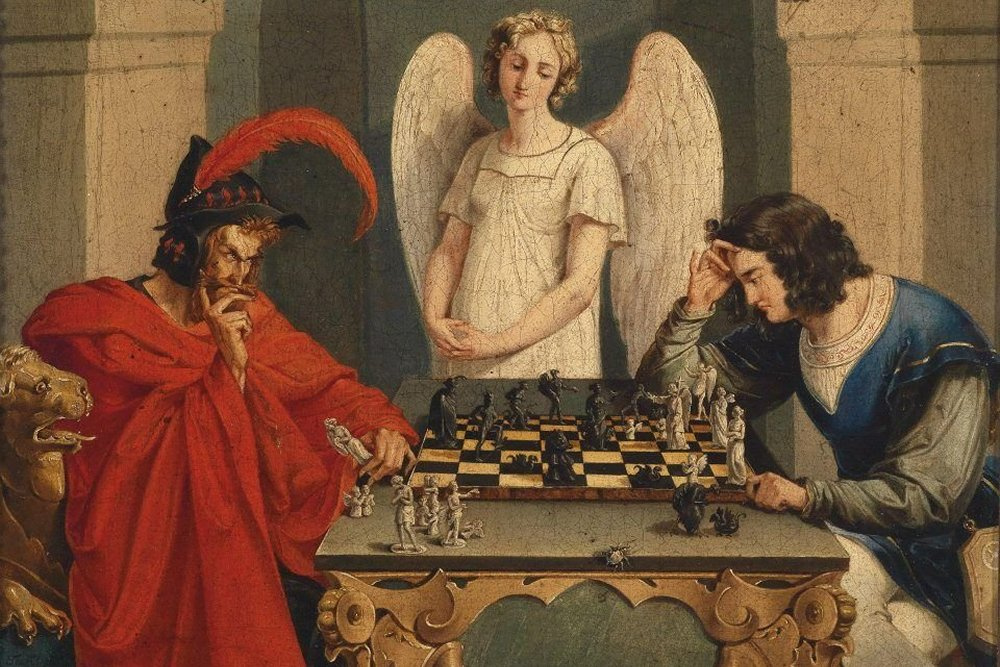
Yet there has been much debate about this image. Not only have some grandmasters been unable to recreate the position because some of the pieces cannot be deciphered, but by some count Faust can not only save the game with his very next move but win it. Did he eventually find the move? We shall never know.
Mephistopheles is striking in his red garment with the feather in his hat seemingly pointing to his opponent as if to say ‘gotcha.’
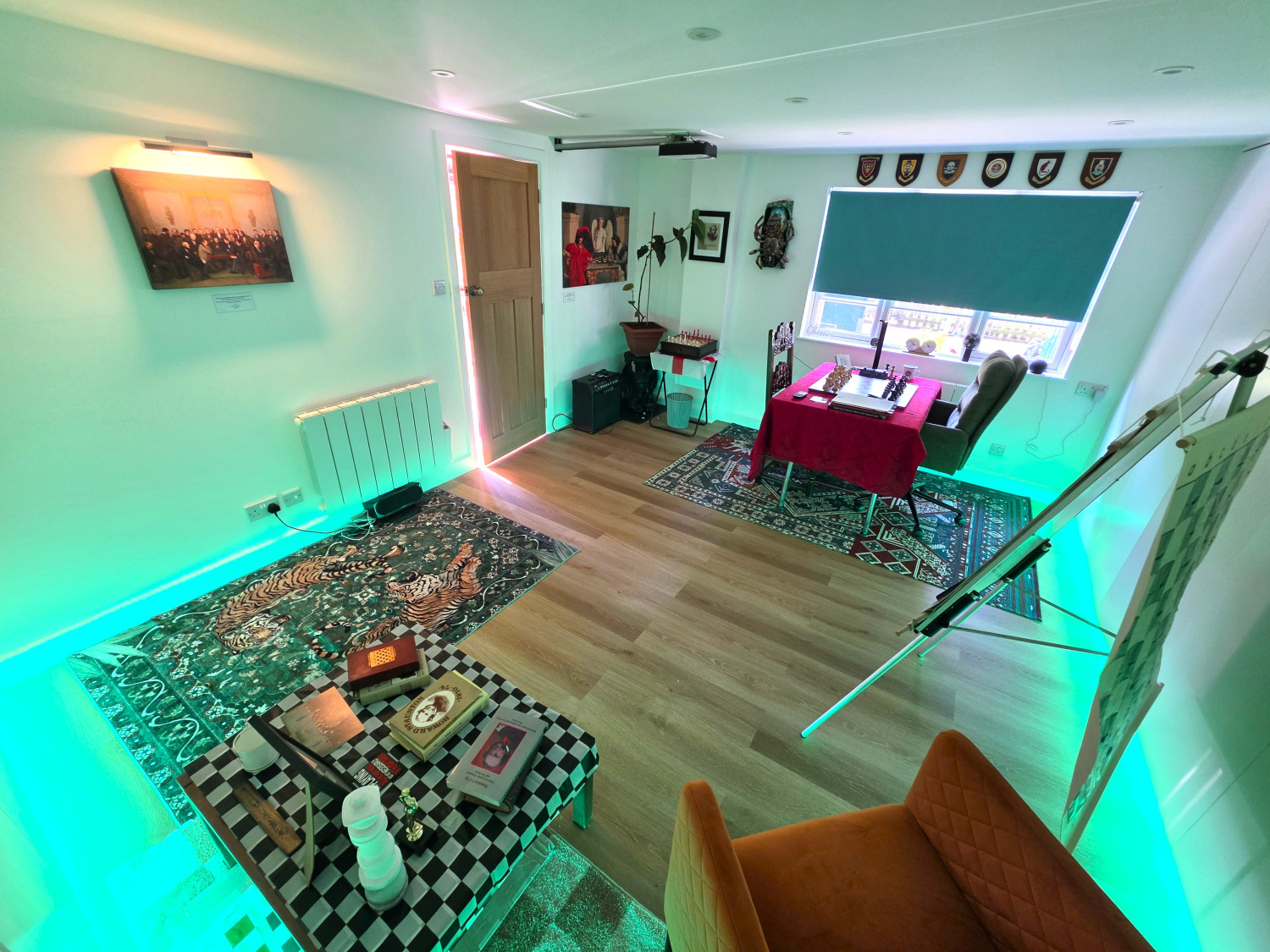
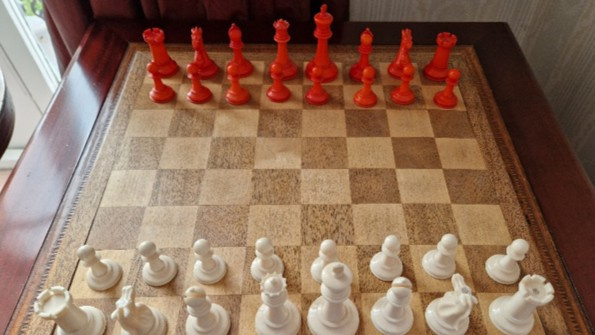
I had LED lights installed on the skirting to lend ambience to the room if required, and a nice orange chair where parents/guardians can sit when I am coaching their offspring. I have a tiger mat, just because I can – I always wanted one and the chess set is of course a Staunton style, named after the great man. Then there are the chairs. One is a swivel chair and the other is fixed, a nod perhaps to the choices made by world champions in years gone by. I prefer the swivel chair as the most comfortable aid to study.
I had a window put in so that I can study by natural light and there is also music. I recall in my youth listening to Grandmaster Raymond Keene on TV saying that listening to Mozart whilst studying chess can arguably raise one’s IQ albeit temporarily. Well wouldn’t that be nice? I can but try, even as a sexagenarian. Trouble is, by the time I get to a club night I have already forgotten some of what I learned. Thanks Amadeus.
Finally, as a further tribute to Staunton I wanted to purchase his books and leave them on a table as a shrine/tribute for people to read. We know about his chess books but not so many outside of the Society will appreciate that he wrote The Great Schools of England in 1869 for reasons I still cannot grasp, but he selected schools including Eton and Rugby of course, yet I was thrilled to see Shrewsbury School feature. I spent my formative years living in Shropshire. Indeed I became Shropshire County Champion and at one point joined and played for Shrewsbury Chess club where I met my mentor David Everington, though he never knew he was a mentor to me.
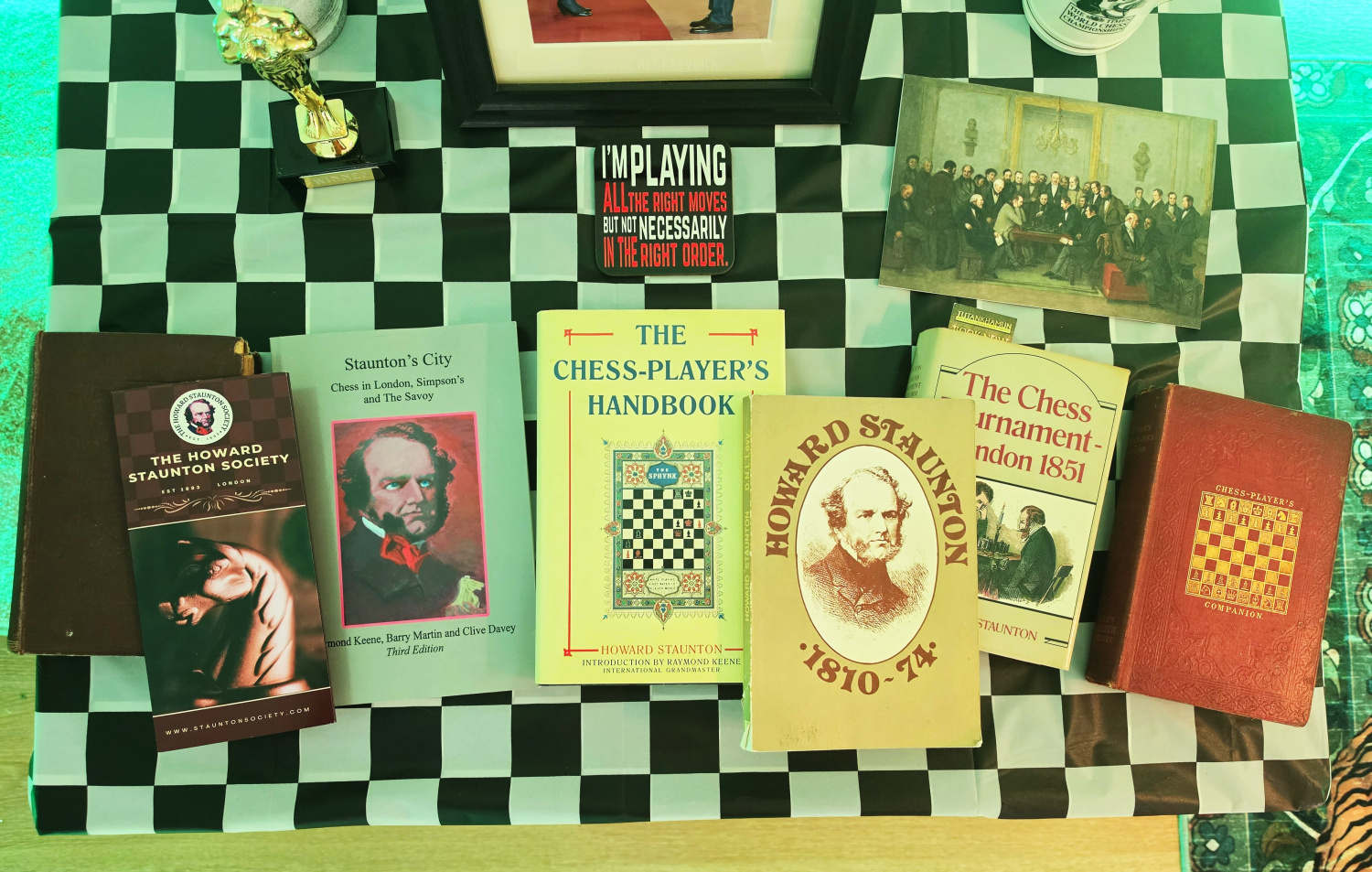
In his book he notes that sports and pastimes included ‘shooting in the long bow, and chess play.’ He will have been delighted to see that. Toxophily and chess require precision and accuracy so I would have loved playing both. I also enjoyed reading about meals where breakfast at 9am consists of tea, sugar, milk and bread and butter. Dinner at 2pm consists of two meats, vegetables, bread and table beer.’ Crikey – beer for the pupils, that certainly wouldn’t happen today. Staunton railed against corporal punishment in schools and was against ‘fagging’ and flogging, offering the advice that a nurtured soul is better than physical punishment. I should also point out that the Shrewsbury School had a paid position of ‘The Secretary of Discipline.’ He kept a book with bad boys names! Goodness gracious me, what a job title.
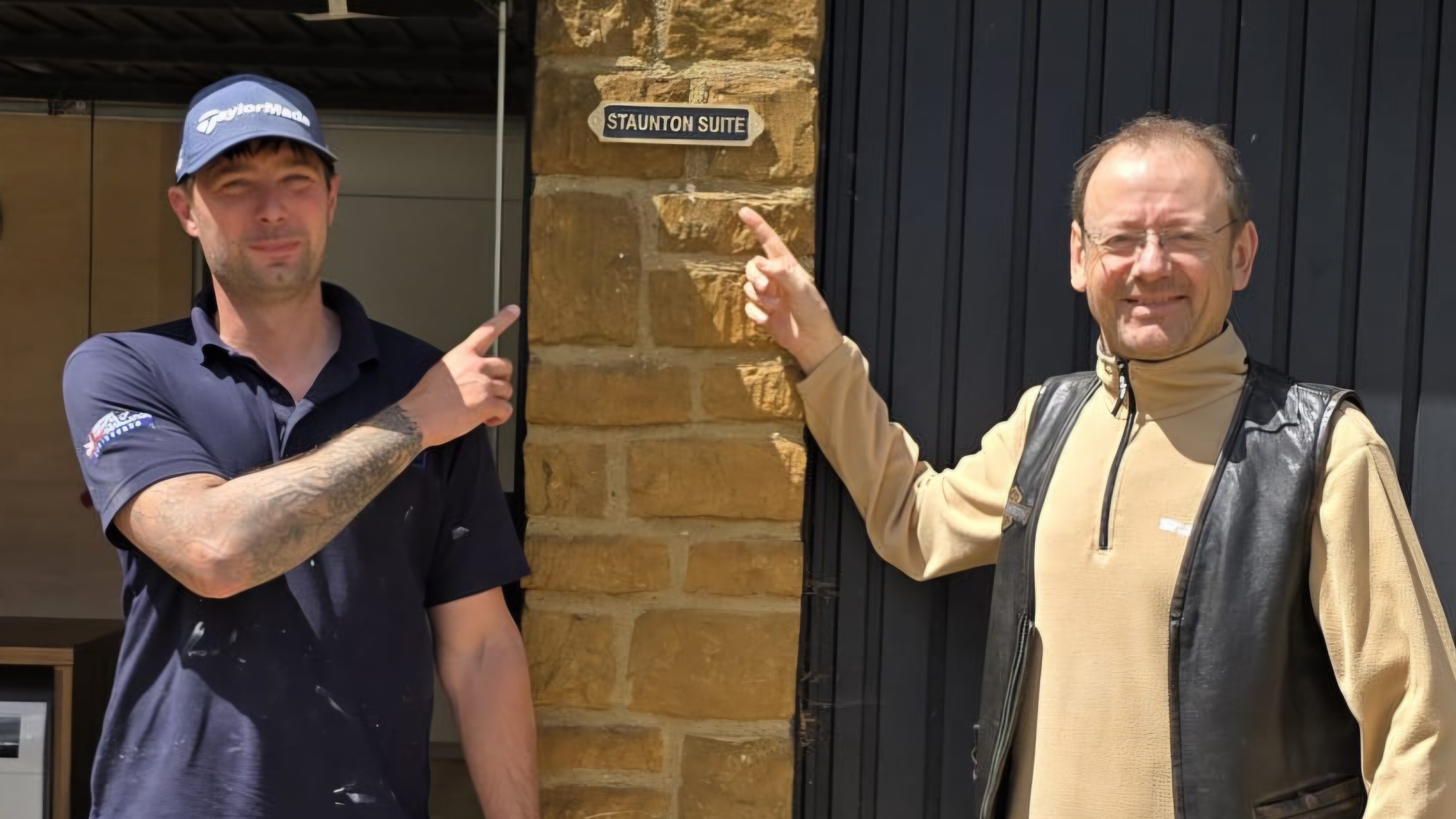
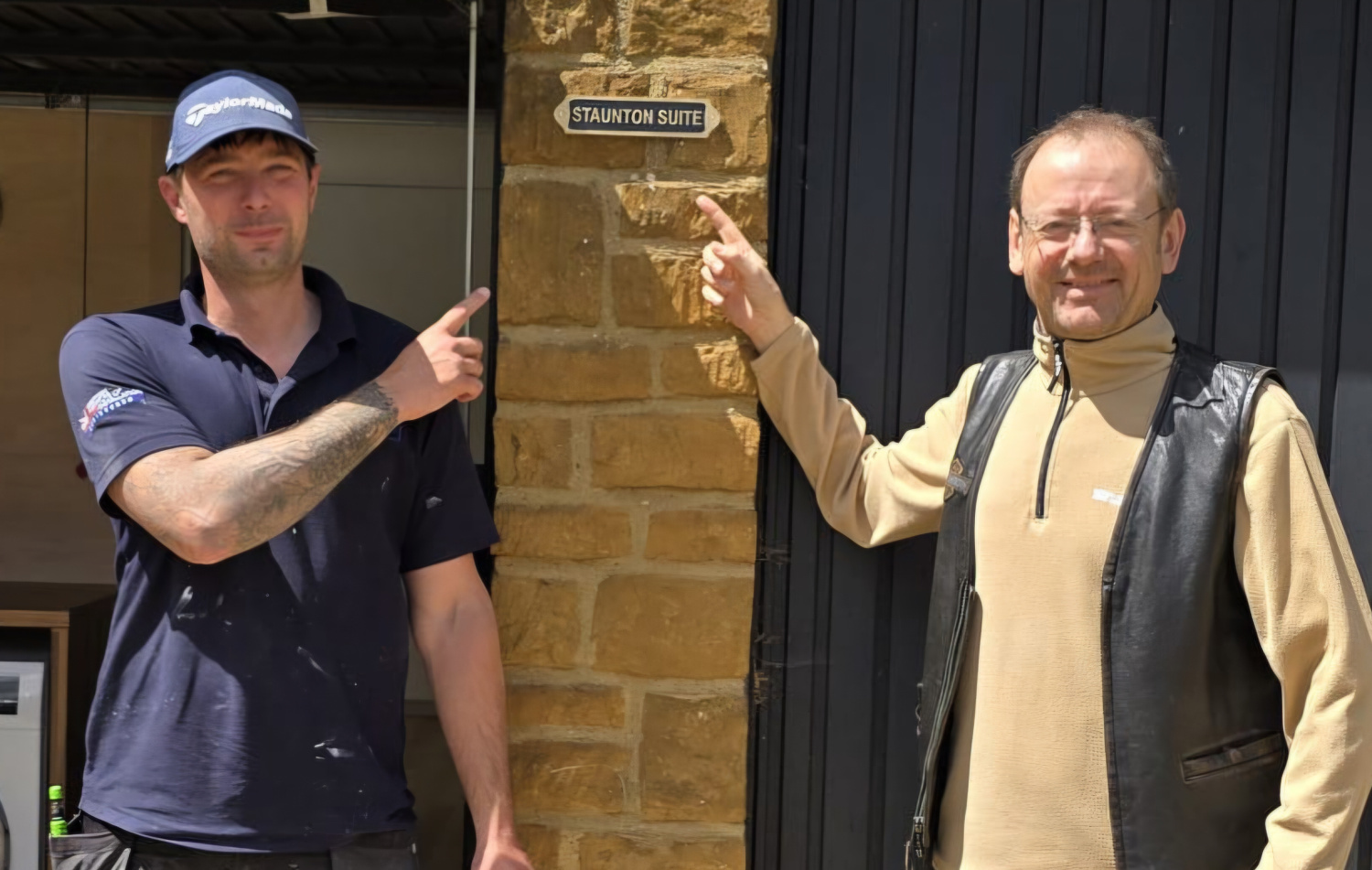
Anyway, should guests to my Staunton Suite wish to recline in the chair and pick up any one of his books they will find plenty of mental nourishment there. When the room was finished after about a month, the finishing touch was to affix the ‘Staunton Suite’ plaque to the wall and this was the defining moment. Even my postie is waiting for someone to send a letter to that room.
I openly confess that I am no expert on the life of Howard Staunton. Better minds than mine will have forgotten more than I know but I can appreciate that he was headstrong, curmudgeonly and could be spiteful yet he was the strongest chess player in the world at one point. Then the mercurial Paul Morphy boarded a ship from America and steamed into Europe to destroy all that stood (or in this case, sat) before him. He challenged our man to a duel at the chessboard. That never happened for reasons well known to Society members, but by all accounts if it had then Morphy would have emerged victorious by some margin.
Is that really the case? We will never know.
As a member of the Royal Society of St George I am bound not only to defend England but to promote and champion it. What better way then than to highlight one of our own?
An Englishman who was never World Champion because the title never existed, but a great polymath who interpreted the works of Shakespeare, highlighted the state of schools in England and paved the way for chess players to learn from his games.
He even has an opening in his honour and our standardised chess pieces named after him.
Not bad I say.
I have a small list of things that I wish to accomplish as a member, one of which is to visit his grave which I know has been lovingly restored by the Society, and also to visit the house where he lived. I note that he died at the age of 64 – one year of life for every square of the chess board and indeed the same age as the great Bobby Fischer. Fischer incidentally gave Staunton high praise.
Staunton took the lead in organising the first ever international chess at the Great Exhibition in in 1851 and in my view he must be remembered for so much more than his relationship with Morphy. If I close my eyes I can imagine him sitting in the cigar-divan at Simpsons in the Strand amidst a group of kibitzers smoking away, watching with admiration the moves being played at the board.
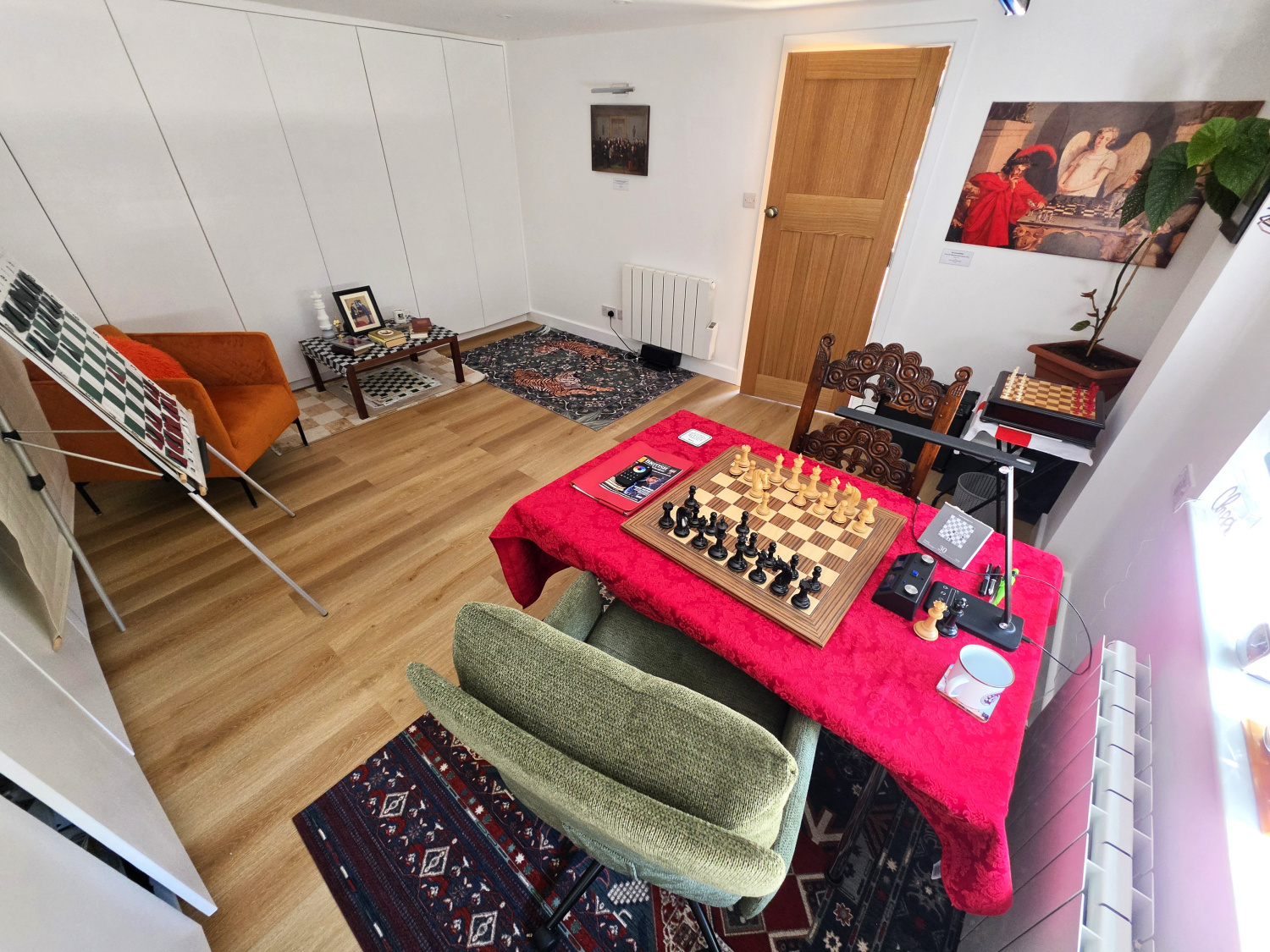
I shall raise a glass to a great Englishman and continue to champion his name and achievements when guests visit my Staunton Suite