My old friend, eight-time World Memory Champion Dominic O’Brien, has often reminded me that if you strip a person of their memories, you erase their humanity. The same, I believe, applies to societies and nations.
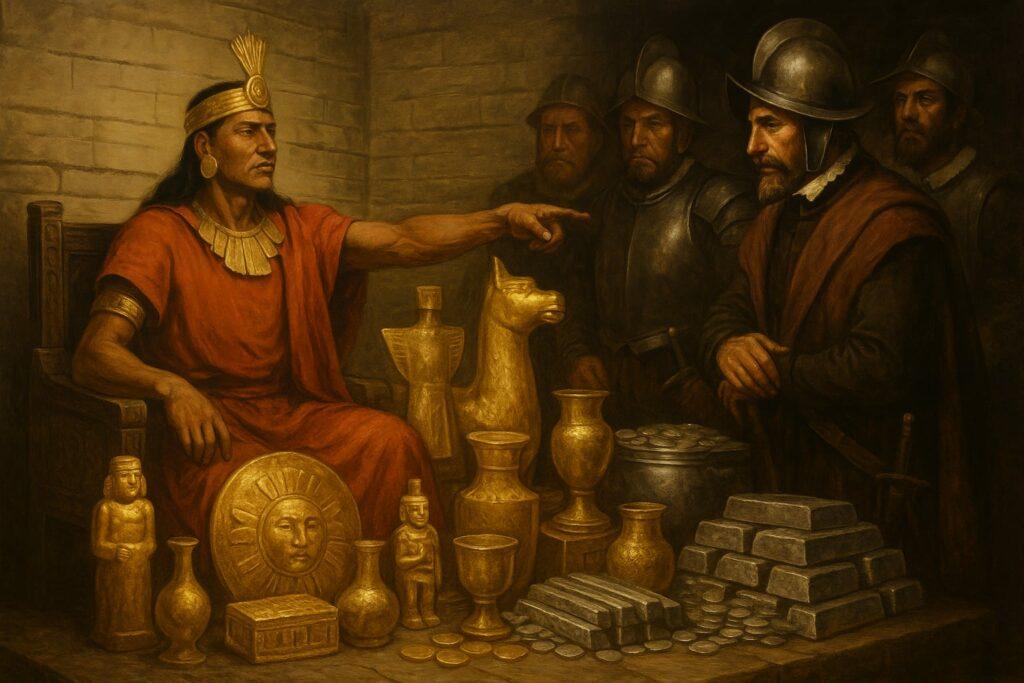
In 1533, Atahualpa, the supreme ruler of the vast Inca Empire, was seized by Francisco Pizarro and a handful of Spanish adventurers. Pizarro had perhaps two hundred men; the Inca legions numbered eighty thousand. Yet within days the great emperor was in chains, awaiting ransom from his own people.
Legend tells us that during his captivity, the Spaniards taught Atahualpa to play chess — the new, brisker version of the game, with its powerful queen and bishop, which had lately become fashionable in Spain. One imagines the scene: the grim stone chamber, the clink of gold carried by Atahualpa’s servants to buy his release, and the emperor himself, attempting to master the strange European game. It is a picture as haunting as Wagner’s Rheingold, where the captive Alberich is forced to surrender his hoard to the treacherous gods of Valhalla.
The story is said to come from the Relación de Inca Atahualpa y de don Francisco Pizarro, a manuscript partly lost, written around 1535 by Juan de Betanzos, one of Pizarro’s companions. Betanzos later married one of Atahualpa’s widows, which gives the tale a certain melancholy authority.
According to this account, Atahualpa once suggested a winning move — the rook instead of the knight — in a game between two Spaniards, de Soto and Riquelme. Riquelme lost, and later, when the soldiers voted on the Inca’s fate, it was Riquelme who cast the deciding ballot for his execution. Thus the game that once symbolised reason and order became, for Atahualpa, an instrument of death.
History is full of such ironies. A small band of men can subdue an empire if they control not only its armies but its memory — if they can erase its past, confiscate its treasures, and teach its people to forget who they were. Once you destroy the story a people tell themselves, you have conquered them more completely than any army could.
In our own age, the same instinct persists in gentler forms. Across the Western world, groups have turned their energies toward the destruction or removal of monuments — to Cecil Rhodes at Oriel College, Oxford University, to General Robert E. Lee in the United States, to Edward Colston in Bristol. The gesture is meant to be moral, but it often resembles vengeance enacted upon marble and bronze. In Rhodes’s case it is doubly ironic, for some of those most eager to pull down his statue have themselves benefited from the scholarships that bear his name. If the effigy must go, should the endowment go with it?
Such impulses are not new. Rameses II of Egypt, anxious to secure his place in eternity, replaced the names of earlier pharaohs with his own. The first emperor of China, Qin Shi Huang, ordered the burning of books that did not conform to his vision of history. In Rome, the names and likenesses of tyrants like Nero were obliterated by decree under the practice of Damnatio Memoriae. Byzantium produced its own wave of iconoclasts, eager to erase the faces of Christ and the saints. One emperor, Alexius Comnenus, resisted them. He was a chess-player, and his strategy saved his life when conspirators surprised him in his chamber. He returned with his Varangian guards, paraded the rebels through Constantinople, and crowned them mockingly with cow’s entrails. His story survives not in marble but on a Senegalese postage stamp, where he appears beside a Scandinavian chess king — a fitting emblem for an emperor whose bodyguard was Nordic and whose mind was strategic.
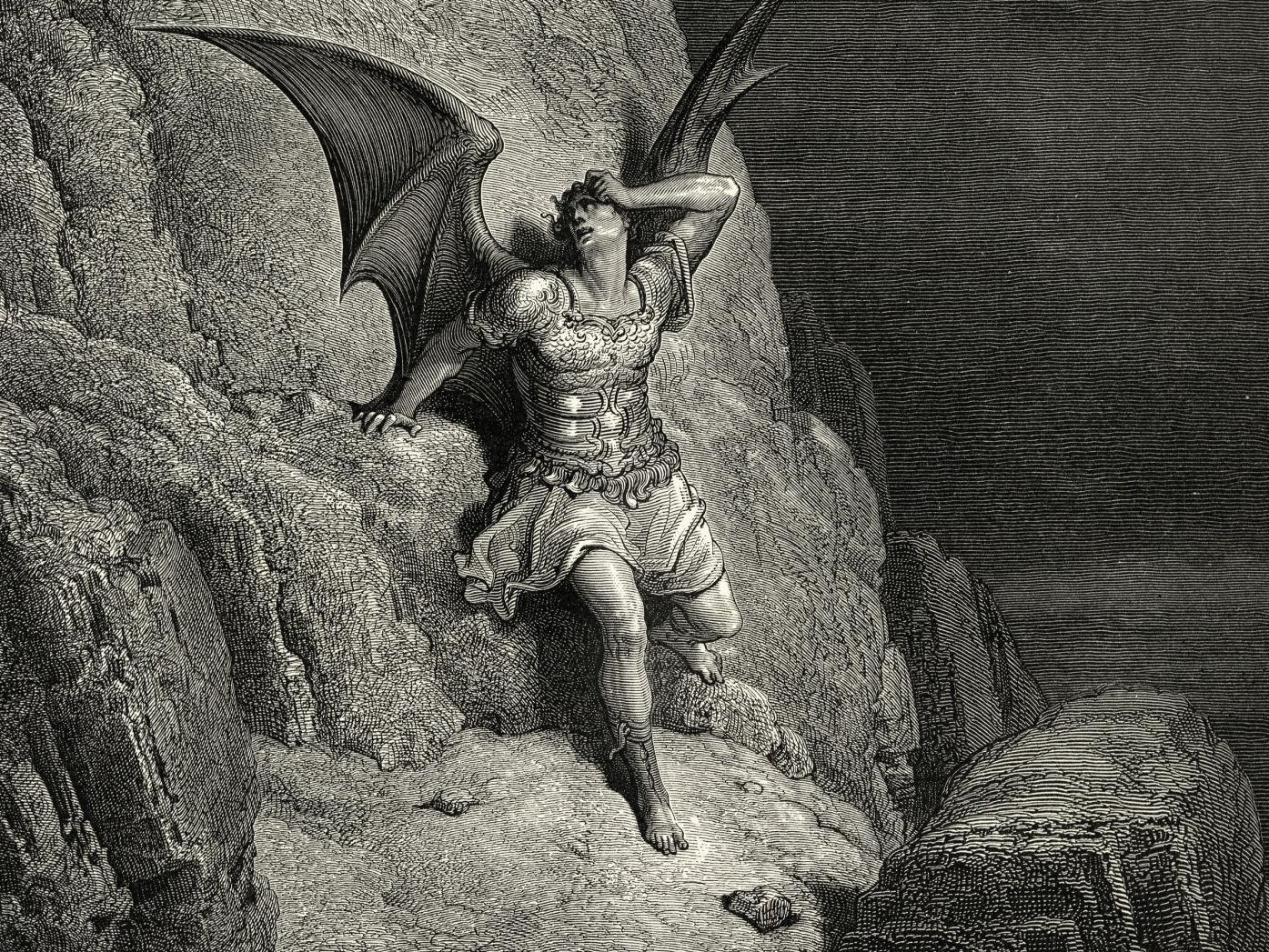
Where memory is attacked, symbols fall first. The destruction of images was a constant companion of Islamic conquest, for the followers of the Prophet, obeying the Mosaic injunction against graven images, preferred to honour the divine through word and pattern. The instinct to purify, to reduce, to begin again, runs deep in the human psyche.
When Hernán Cortés conquered the Aztecs in 1521, he followed the same pattern: burning their temples, erasing their records, and replacing their past with his own. What he achieved by force, Henry VIII accomplished by decree. The king who once bore the papal title Fidei Defensor became the destroyer of monasteries, relics, and saints’ images. Across Europe, the Protestant Reformation swept away the painted heavens of Catholicism, and in its place, the Dutch began to paint their new paradise — the quiet order of fields, canals, and homesteads.
Sometimes the destruction turned absurd. In Riga, in 1524, Puritans uprooted a statue of the Virgin Mary and hurled it into the river. When the wooden figure floated, they took this as proof of witchcraft, retrieved it, dried it, and burnt it. The logic of fanaticism is always complete.
We see its mild reflection today in the debates over Land of Hope and Glory or Rule, Britannia! at the Proms. Patriotic songs, like legends, are not literal statements of fact; they are the myths through which a people recognise themselves. The same controversy attends the relocation of Sir Hans Sloane’s bust at the British Museum — from its public plinth to a section on slavery. Yet it was Sloane’s collection that founded the Museum itself. Shall we now condemn even the Isle of Lewis chessmen, on the grounds that the Vikings were no saints?
To erase history is a dangerous vanity. By that logic we should discard the games of Paul Morphy because he supported the Confederacy, or the masterpieces of Alekhine because he played in Nazi tournaments, or the Soviet school of chess because its grandmasters served Stalin. As Richard Eales observed in Chess: The History of a Game, even Soviet champions felt the “powerful breathing of the motherland” on their necks — comforting in victory, oppressive in defeat.
The Soviet habit of airbrushing rivals from photographs was only the latest form of Damnatio Memoriae. Yet when Ukraine tore down 1,320 statues of Lenin, was that an act of freedom or of forgetting? Do we applaud one and condemn the other, or recognise in both the same uneasy desire to rewrite the past?
Professor Howard Zinn once warned that ignorance of history leaves us helpless before authority. To his word “government,” I would add every institution that claims infallibility — whether in science, media, or art. Voltaire’s injunction still applies: dare to think for yourself.
Our modern iconoclasts seem blind to the complexity of history — that one life can contain contradiction, that virtue and sin often share the same face. Even Mr. Spock, that logician of fiction, observed that only Nixon could make peace with China. The truth of history is rarely tidy.
Those who seek to erase the symbols of their own past keep dubious company. They march, unknowingly, beside emperors, inquisitors, and conquerors who once believed that purity could be imposed by fire. No fallen statue or silenced song can right the wrongs of history. Far better, I think, to learn from it — to face its shadows honestly and to use that knowledge to build something wiser. To pretend the past did not exist is merely to prepare the ground for its repetition.