Somewhere in Birmingham, forty-odd years ago, a boy sat on the floor in the dark by his bedroom door, listening for the shape of the house around him. He had no father, no mentor, no money to speak of — "nothing," as he puts it now, with the flatness of a man who long ago resolved not to be a victim. Then, at twelve, a schoolteacher named John Lenton showed him how the pieces moved, and the room acquired a light.
The boy grew up to face Anatoly Karpov across a board, to captain England at the NATO championships, and to be crowned UK Armed Forces veteran champion — and to receive the MBE for services to prisoners. He remains, by fierce preference, an amateur: a club player, a volunteer, a self-described "back street Brummie" who has spent more than a decade carrying the sixty-four squares into some of the least visited rooms in the country.
On 9th September, Carl Portman brings that decade to L'Escargot on Greek Street, as a guest of honour and proud member of the Howard Staunton Society. His talk is called Chess in Prisons: And Why It Matters — and those last four words, he will tell you, are aimed squarely at anyone tempted to look away. Ahead of the evening, he spoke to Gambit about hardship and honours, tantrums and testimony, and why a game fifteen centuries old still works its magic in a contemporary cell.
From a Birmingham council estate to Buckingham Palace. You've written that you're "a council-estate kid" who found chess at twelve — and that the game became your refuge in a childhood marked by real hardship. When the letter came confirming the MBE for "services to prisoners," what did that boy make of it?
CARL: I like to think that I am grounded and humble, keeping my feet on the ground, but there are rare occasions when I do get excited and experience that 'wow' moment. Curiously, I experienced mixed feelings. Sure, it is absolutely wonderful to be recognised with a state honour, and this award was not only for me — it brought chess centre stage for a while, and in particular chess in prisons. It gave me, and still gives me, the platform to talk about the game I love. The sad part was that my dear grandparents and mum are all long since gone, and they would have been so proud of the Back Street Brummie. I would have loved it for them.
The title of your forthcoming talk is a small act of persuasion. You didn't call the talk "Chess in Prisons." You called it "Chess in Prisons And Why It Matters." Those last four words seem aimed squarely at the sceptic. Who is that sceptic in your mind, and what have you learned about winning them over? Why does it matter?
CARL: The sceptic is the general public, but it isn't entirely their fault. The only time most people read or hear anything about prisons is because something negative has occurred — escapes, assaults, drugs, early-release schemes, crowded prisons — but they don't have a clue about the good-news stories that occur behind those walls. The media isn't so interested in that. It matters because rehabilitation matters. There is a personal cost and a financial one. The public is paying up to £60k a year to keep someone in prison. The public is suffering from the many acts of crime. The public is suffering from the lack of cohesion and results for people coming out of prison who genuinely want a fresh start. If we don't reach out across the dark waves, people will continue to drown.
Let's meet the discomfort head-on. Some people hesitate at the very word "prisons." You've described yourself as a "hard-liner" who believes if you do the crime, you do the time. How do you square that firmness with the compassion your work obviously requires?
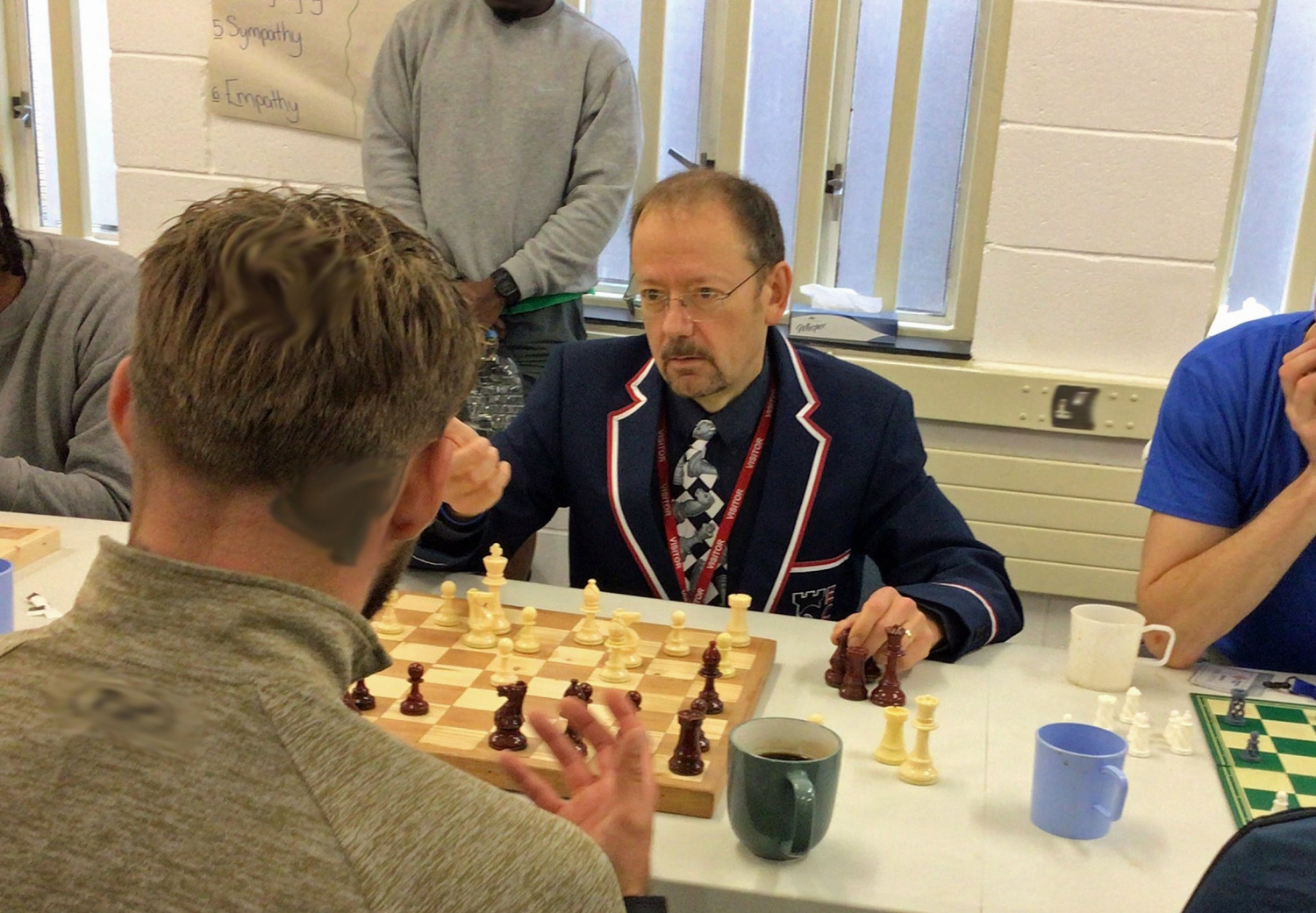 HMP Bullingdon Sept 2024CARL: I think you can do both. As a manager of many years in government, I used to do my best to be consistent. My view was to be fair, but that people should recognise and understand boundaries, and lines that should not be crossed. I included myself in all of this. I do believe that we are responsible for our thoughts and actions, and that actions have consequences. We need that deterrent; we need tough prison sentences — or look how people simply sneer when given soft sentences — but we also need to give opportunities for people to change, to engage in something much more meaningful. None of this is something I don't expect of myself.
Your open document gathers hundreds of prisoners' own words, filed under headings like Mental Health, Creativity, Family Connections. One man wrote, "With brutal honesty, chess probably kept me from suicide." Another taught his son to play down the phone from his cell. When you read those letters back, which category surprised you the most — the one you never expected chess to reach?
CARL: Honestly speaking, I knew from day one back in 2014 that chess could have a massive positive impact on the prison community — after all, I know how it influenced and shaped my own life. However, when you actually read a letter from someone saying that chess is the new distraction that changed their view on suicide, that they have reconnected with family through chess after many years, or that their mental health has improved significantly, you cannot help but sit back and think, 'wow, that's powerful.' After all, we have an ancient game being played in a contemporary setting and still weaving its magic.
You often say chess is "a metaphor for life" — think before you move, own the consequences, learn to lose with grace. What actually happens, physically, in a room when one of "the most unmanageable men in the prison" clenches his fists over a lost piece — and then, over weeks, stops throwing them?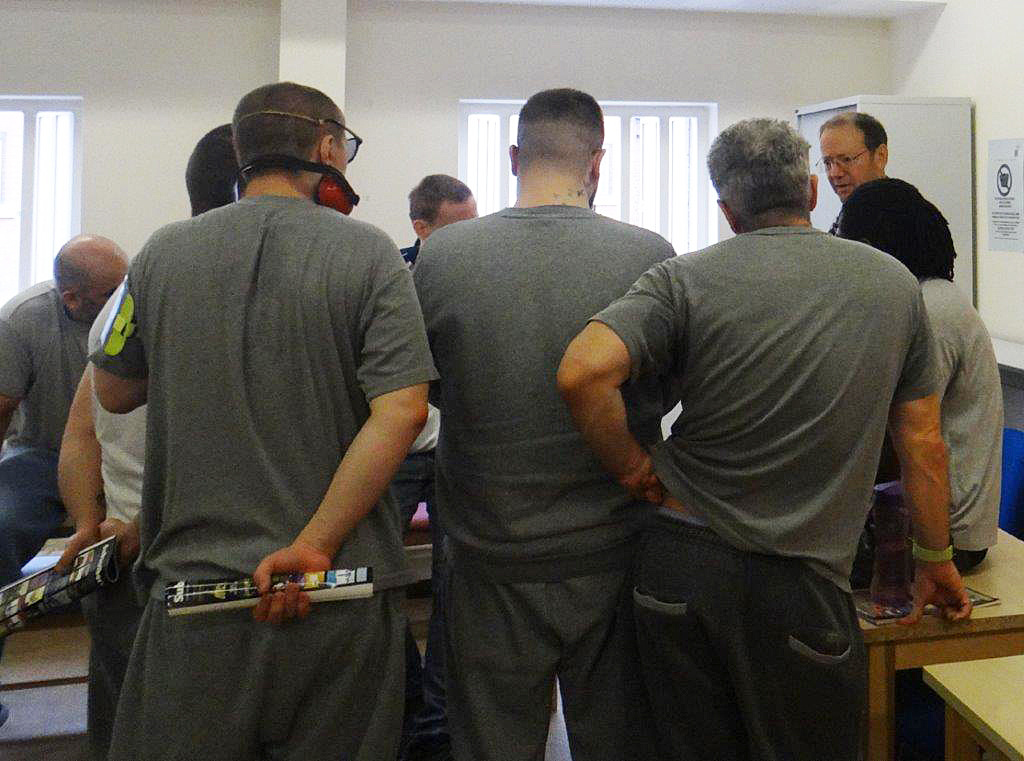 HMP Wakefield 24 August 2022
CARL: I have had more fits and tantrums in school classes. Generally speaking, the prison community has been outstanding. I visit because I have been asked to. It is something the prisoners want and they cherish it. They don't want to compromise the situation; they just want to play chess. They love that I volunteer my time to do this. It is amazing to me how many times I have offered prisoners a (bad) move back and they have refused, saying, 'no — I played my move and I have to stand by it.' That's about accepting consequences for actions, and I could not be more impressed. Sure, I have had a few tense moments with some prisoners, but I am no wilting flower, and being a back street Brummie I am pretty good at reading a room and thinking on my feet. I have rarely seen any bad behaviour at the board. Plenty of macho banter, lots of bad and offensive language — we are in a prison, after all — and some gamesmanship, but generally it's all good.
Prisoners with depression, anxiety, autism, ADHD and addiction recur again and again in your testimony — one man with Asperger's described the board "lighting up" when the strategy clicks into place. What have you come to understand about why chess reaches minds that conventional programmes, in your words, treat as "box-ticking exercises"?
CARL: Great question! Here's the rub. First of all, conventional educational programmes are not working. Why? Because prison officer resources are so stretched that they cannot fulfil their obligations to give prisoners access to education. As a result, many are literally locked away for 23 hours or more a day. That's just not good for anyone. With chess, at least you can take what I call 'The Holy Trinity' into a cell — the chess set, the chessboard and the chess clock. At least the first two. Add a chess book or two and you have a magic alchemy right there. Chess covers the curriculum in some ways:
- English — you can read, and learn to read, chess books
- Mathematics — chess helps you calculate, and you use the alpha-numeric system
- Science — look at the advent of computers, from the Turk to Stockfish
- Sport — there is a result; of course chess is a sport, and certainly a competition
- History — our game is 1,500 years old
- Geography — it began in Persia and is now a worldwide activity; put up a map of the world and learn geography by plotting the course from Persia to the Middle East to Europe and beyond
- Art — there has been much chess in art
- Religion — chess and religion have a connection, even if sometimes a dubious one
- Culture — no more need be said; it is a cultural game
See how it is about much more than moving pieces across a board? Prisoners can take chess at their pace. They can learn the way that they best learn, either by playing or reading. Chess is a friend for life.
Team England, from "zeros to heroes." In 2022 you and Nigel Towers took a squad from HMP Hewell into the World online prison championship in a matter of weeks — and they drew with Germany. What did that result do for men who'd been told they were "difficult to manage," and what did it teach you about what these players are capable of when someone simply expects something of them?
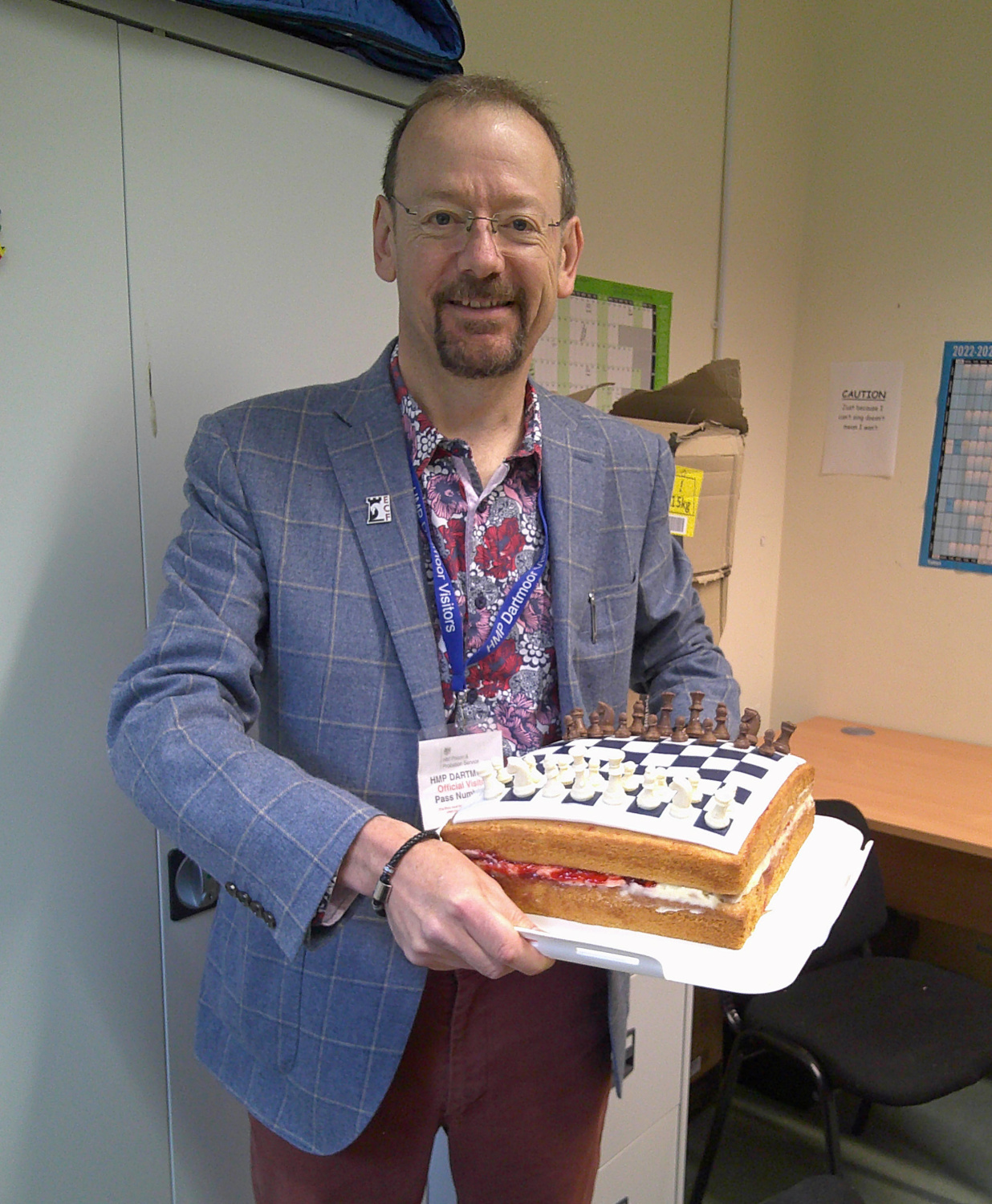 HMP Dartmoor 31 May 2023CARL: I was always honest with the team. It's important to set realistic goals in chess — and life? I told them that we were never going to be strong enough to win the competition, which was just a fact. Yet we needed a goal, and that's where I brought the fun aspect in. I said we must not lose to the Germans as we do in football, usually on penalties. That hit home with the team and was something they strove for. In the end, we drew, so we were all delighted. It showed that preparation with hard work can bring results. That chess is a meritocracy — that results through honest work bring reward, in that feeling of self-worth, of belonging.
Naturally this is all applicable to the outside world, and they understood my point. In the end I gave a letter to every man saying how much I had enjoyed working with them, and that I had seen something positive, something worthwhile, in each and every one of them. It was up to them to carry it out of the prison door and into society.
They had represented their country in international competition. How many people can say that?
The long game of persuasion. You've lobbied ministers who kept being reshuffled, worked through a period when books themselves were banned in prisons, and built your reach through an Inside Time column read cell to cell. After more than a decade — "the longest tour in history," as you call it — where is the real resistance now: money, politics, or public imagination?
CARL: I return to the media, which as you know very well has a massive influence on public opinion, and indeed on government spending and policy. I know — I just know — that one of the weakest links occurs the moment prisoners are released from prison. Some genuinely want and need help to get back on their feet, but society lets them down time and again in this respect. I say society, but I also mean governments. They need more than a halfway house when they leave. Some have no home, no family, no friends, no money, no job. What do they do? What would you do? We need a system of support — to those who want it — to help them back on the ladder, or they will return to prison very swiftly, and the cycle will begin again.
The public are in no way 'wrong.' There are prisoners who are dangerous, horrible people who must be locked away for our safety, but the vast majority are coming back out. There are only a few true full life-term prisoners in the UK. I know we can do better in trying to rehabilitate and reduce reoffending. We simply must do better.
You've faced Karpov, captained England at the NATO championships, and become UK Armed Forces veteran champion — yet you write as a proud champion of the amateur, the club player, "the great unsung heroes of the game." Why does that identity matter so much to you, and how does it shape the way you teach a beginner behind bars?
CARL: Another outstanding question. It matters because we amateurs are the game. Millions of us across the globe play for fun. Millions will never be masters or even strong players, yet they will arguably derive as much enjoyment out of playing chess as any elite player. In football, they say that no one player is bigger than the club. That's the same for chess. We are all Caissa's — the goddess of chess — children, and the game belongs to all of us.
There is one more element. I keep saying I came from a council estate background with no father, no mentor, nothing. My prospects were slim; support was non-existent through my childhood. I am, however, not a victim. It taught me to stand up for myself and be resourceful. Then I found chess at the age of 12, and this super-charged all of that. I realised that if I could do some of the things I have, then people growing up in the same position as me could too.
I always want to reach out, to encourage and to help people believe in their abilities. No one did it for me, so I will do it for others. For me, chess was my light. What I say to others is: be positive, and find yours.
Why this talk, this evening, and why the Staunton Society? For a member weighing whether to book — perhaps put off by a subject they think isn't "for them" — what would you say they'll actually take away from the night? And what draws you to share it under the banner of a society devoted to Howard Staunton's legacy and the enduring life of the game?
CARL: Firstly, this is an opportunity to learn about something good happening in prisons. Something quite remarkable, actually. We all need balance in our lives, and we cannot just be battered by one side of the story. I will tell you about how the 'simple' game of chess is doing more for many prisoners than any education scheme.
If you had told me when I was a 14-year-old boy that I would be standing talking to such an eminent group of people, I simply would not have believed you. It would have been another world — and that 14-year-old is still within me. I still feel incredibly humbled and honoured to speak. Life is short; you have to find people in your life that are out of your comfort zone. The society has chess lovers, of course, but also intellects and philanthropists, and just the most amazing people.
The takeaway from the night is the power and beauty of chess as not just art, science and sport, but as a seed for new and stable communities, as a tool for personal growth, and as something that reveals and challenges your character.
Howard Staunton was seduced by the very same game that Ted — the prisoner in Cell 46 — now plays.
Where you play chess matters not. By a crackling fire in your own home, behind a desk at school, sitting in your bed in hospital, flying across the world in a jumbo jet, or indeed languishing for 23 hours a day in a tiny prison cell, the motto of FIDE still applies: Gens una sumus.
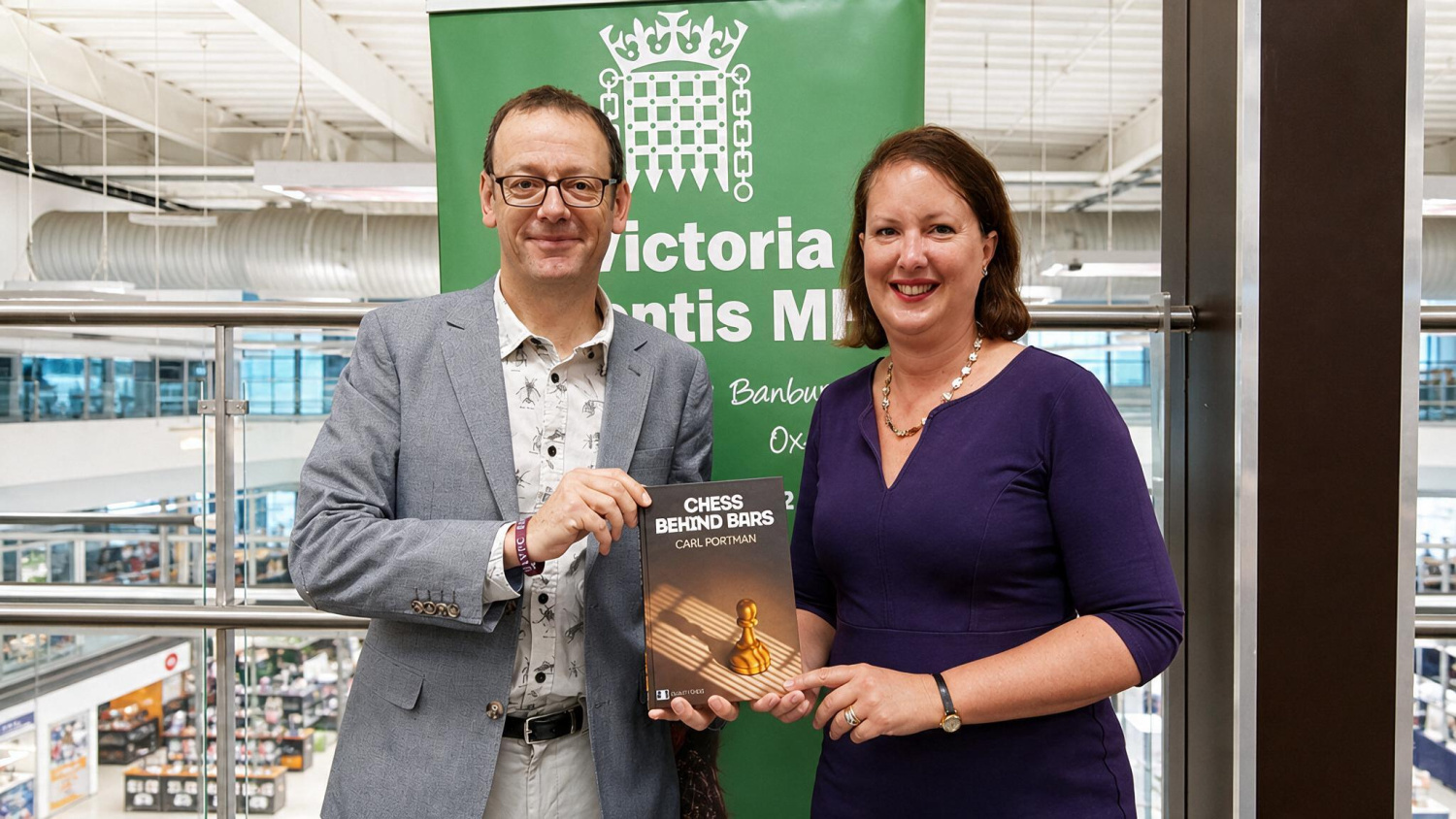
Carl Portman MBE speaks on Chess in Prisons: And Why It Matters for the Howard Staunton Society at L'Escargot, 48 Greek Street, Soho, on 9th September. He will bring and sign copies of his book, Chess Behind Bars. Tickets and full details at stauntonsociety.com/events.